 Flooring Cost Calculator
Introduction
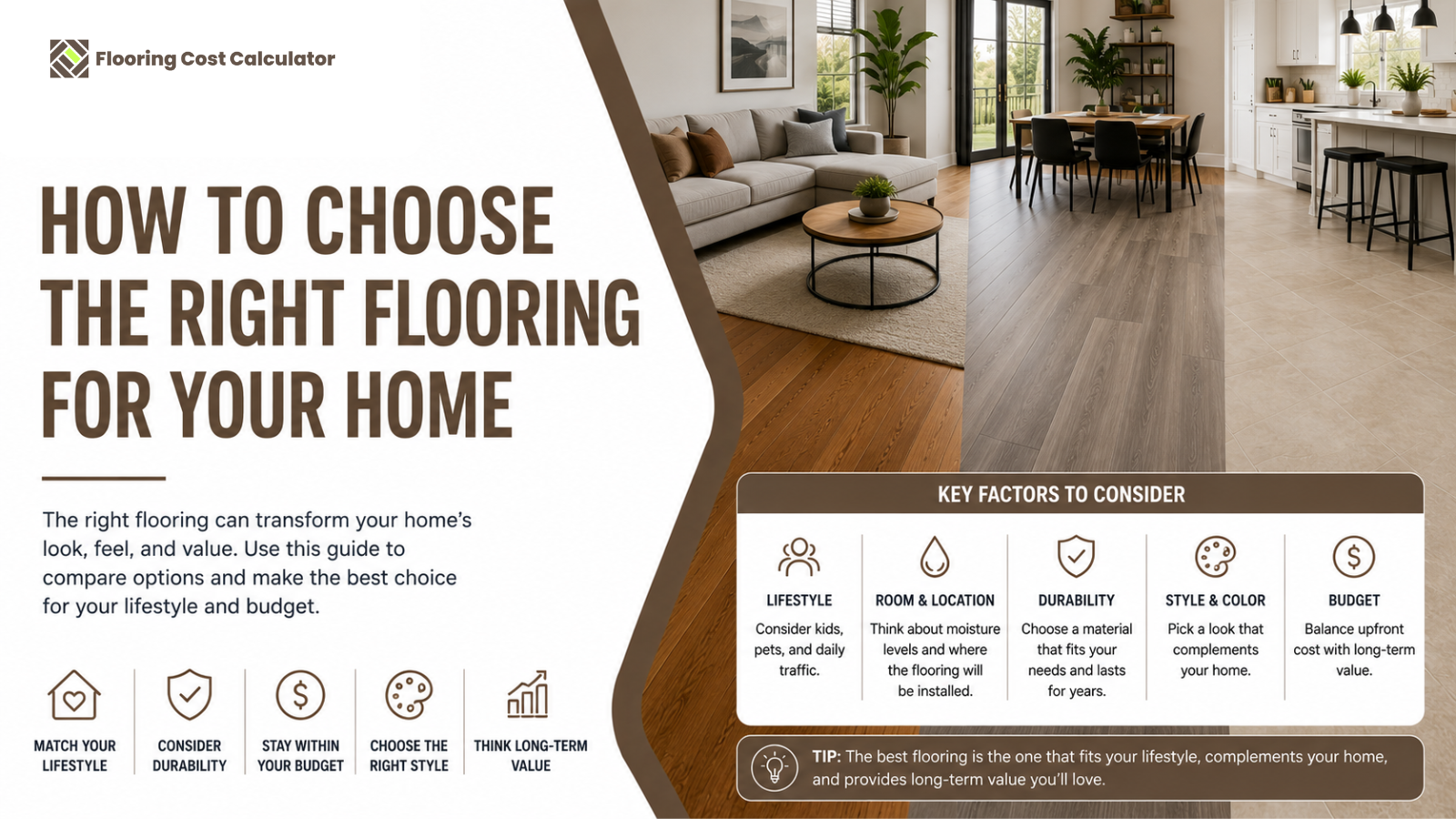
Choosing new flooring is one of the most important decisions you can make when updating or renovating your home. Flooring covers a large portion of your interior space and has a major influence on how each room looks, feels, and functions.
But appearance is only one part of the decision.
The right flooring should also match your lifestyle, household traffic, maintenance preferences, budget, local climate, and the specific requirements of each room. A flooring material that works beautifully in a bedroom may not be the best option for a bathroom, basement, or busy kitchen.
Homeowners today can choose from a wide range of materials, including carpet, laminate, luxury vinyl plank, hardwood, engineered hardwood, ceramic tile, and porcelain tile. Each option offers different advantages in terms of durability, moisture resistance, comfort, maintenance, installation cost, and expected lifespan.
With so many choices available, selecting the right flooring can initially feel overwhelming. The key is to evaluate your priorities before focusing on colors, patterns, and finishes.
This guide compares popular flooring materials and explains the most important factors to consider so you can choose flooring that fits your home, lifestyle, and long-term budget.
Quick Answer
The best flooring for your home depends on:
- Your total budget.
- The room where the flooring will be installed.
- Household foot traffic.
- Moisture exposure.
- Children and pets.
- Maintenance preferences.
- Desired appearance.
- Comfort requirements.
- Expected lifespan.
- Installation costs.
As a general guide:
- Carpet is ideal for homeowners seeking softness, warmth, and comfort.
- Laminate provides an affordable wood-look appearance with relatively simple maintenance.
- Luxury vinyl plank offers excellent versatility, durability, and moisture resistance.
- Engineered hardwood provides a real-wood appearance with greater dimensional stability than many solid wood products.
- Solid hardwood offers timeless beauty, longevity, and refinishing potential.
- Ceramic and porcelain tile provide outstanding durability and moisture resistance, particularly in kitchens, bathrooms, and other demanding areas.
There is no single flooring material that is best for every home or every room.
Start With the Room
Before choosing a flooring material, think about where it will be installed.
Different rooms create different demands.
A bedroom typically experiences less moisture and lower foot traffic than a kitchen or entryway. Bathrooms require flooring that can handle frequent water exposure. Basements may have moisture concerns that do not exist on upper floors.
Consider each room individually.
Common areas include:
- Living rooms
- Bedrooms
- Kitchens
- Bathrooms
- Basements
- Hallways
- Entryways
- Laundry rooms
- Home offices
The best whole-home flooring strategy may involve using different materials in different areas rather than selecting one product for every room.
Consider Your Budget
Budget is one of the first factors most homeowners consider when selecting flooring.
Your total project cost may include:
- Flooring material
- Extra material for waste
- Professional installation
- Existing flooring removal
- Disposal
- Subfloor preparation
- Underlayment
- Moisture protection
- Baseboards and trim
- Transitions
- Furniture moving
The price displayed for flooring material is therefore only one part of the total project investment.
When comparing materials, consider both the purchase price and installation cost.
Some affordable materials are relatively simple to install, while others require more specialized labor.
Premium materials may also provide longer service lives, potentially improving their long-term value.
Think About Household Traffic
Some areas of a home experience significantly more foot traffic than others.
High-traffic areas often include:
- Entryways
- Hallways
- Kitchens
- Living rooms
- Family rooms
These spaces generally benefit from durable flooring that can withstand frequent use.
Lower-traffic areas, such as bedrooms or guest rooms, may allow you to prioritize comfort or appearance over maximum durability.
If your household is particularly active, consider flooring with strong wear resistance and straightforward maintenance.
Consider Children and Family Life
Households with children often place additional demands on flooring.
Common concerns include:
- Spills
- Dropped objects
- Toys
- Dirt
- Frequent cleaning
- Heavy foot traffic
Practical flooring for family homes should generally be:
- Durable
- Easy to clean
- Appropriate for the room
- Comfortable enough for daily use
Luxury vinyl plank and laminate are popular choices for many family living areas because they combine durability with relatively easy maintenance.
Carpet remains popular in bedrooms and play areas where softness and comfort are priorities.
Think About Pets
Pets can influence flooring decisions significantly.
Dogs and cats may expose floors to:
- Scratches
- Pet hair
- Water spills
- Accidents
- Dirt
- Heavy traffic
Pet-friendly flooring often emphasizes:
- Scratch resistance
- Moisture resistance
- Easy cleaning
- Durability
Luxury vinyl plank and tile are frequently considered practical choices for homes with pets.
Hardwood can also work in pet-friendly homes, although scratches may become more noticeable depending on the wood species and finish.
Carpet provides comfort but can require more frequent cleaning when pets shed or track dirt indoors.
No flooring is completely immune to pet damage, so consider your specific pets and household habits.
Evaluate Moisture Exposure
Moisture resistance is one of the most important considerations when choosing flooring.
Areas with potential moisture exposure include:
- Bathrooms
- Kitchens
- Laundry rooms
- Mudrooms
- Basements
- Entryways
Flooring materials vary significantly in how they respond to water.
Some products can tolerate frequent moisture exposure, while others may swell, warp, stain, or deteriorate.
Before selecting flooring for a moisture-prone area, check the manufacturer's specifications carefully.
"Water-resistant" and "waterproof" are not necessarily interchangeable terms.
Even waterproof finished flooring does not eliminate the need to address leaks, standing water, or moisture problems beneath the floor.
Carpet Flooring
Carpet remains a popular residential flooring option, particularly in rooms where warmth and comfort are priorities.
Advantages
Carpet offers:
- Softness underfoot
- Warmth
- Noise reduction
- Comfortable living spaces
- Wide variety of colors and textures
It is commonly used in:
- Bedrooms
- Family rooms
- Living rooms
- Home offices
- Playrooms
Considerations
Carpet may require more frequent cleaning than hard-surface flooring.
It can also be more vulnerable to:
- Stains
- Moisture
- Pet accidents
- Wear in high-traffic areas
Carpet may be an excellent choice when comfort is the primary goal, but it is generally less suitable for bathrooms and other areas with frequent moisture exposure.
Laminate Flooring
Laminate is popular among homeowners who want the appearance of wood at a more accessible price point.
Modern laminate products are available in many:
- Colors
- Wood-look patterns
- Textures
- Plank sizes
Advantages
Laminate can offer:
- Affordable pricing
- Attractive appearance
- Easy routine cleaning
- Good wear resistance
- Relatively fast installation
It can work well in:
- Living rooms
- Bedrooms
- Dining rooms
- Home offices
- Hallways
Considerations
Moisture performance varies by product.
Traditional laminate can be vulnerable to swelling if water penetrates the flooring system, although newer products may offer improved water resistance.
Always check the manufacturer's recommendations before installing laminate in moisture-prone areas.
Luxury Vinyl Plank
Luxury vinyl plank, commonly called LVP, has become one of the most popular flooring choices for modern homes.
It is designed to provide the appearance of materials such as wood while offering practical performance.
Advantages
LVP may provide:
- Excellent moisture resistance
- Easy maintenance
- Durable wear layers
- Comfortable walking surface
- Wide design selection
- Straightforward repairs in some installations
Depending on the product, it can be suitable for:
- Kitchens
- Living rooms
- Bedrooms
- Hallways
- Basements
- Laundry rooms
Some products are also designed for bathroom installations.
Considerations
Quality can vary significantly between products.
Consider:
- Wear layer
- Overall construction
- Locking system
- Warranty
- Manufacturer reputation
- Installation requirements
Subfloor preparation is also important because significant irregularities beneath thin flooring can sometimes become noticeable.
Engineered Hardwood
Engineered hardwood combines a real wood surface with a layered construction.
It provides the appearance of natural wood while offering different installation possibilities from traditional solid hardwood.
Advantages
Engineered hardwood offers:
- Authentic wood appearance
- Natural grain and texture
- Premium visual appeal
- Good dimensional stability
- Multiple installation options
It can work well in:
- Living rooms
- Dining rooms
- Bedrooms
- Hallways
- Home offices
Considerations
Not all engineered hardwood products are equal.
The thickness of the real wood wear layer can influence whether the flooring can be refinished and how many times.
Moisture exposure should still be considered carefully.
Although engineered hardwood may offer improved dimensional stability compared with some solid hardwood installations, it is still a wood-based product.
Solid Hardwood Flooring
Solid hardwood remains one of the most traditional and desirable residential flooring materials.
When properly maintained, hardwood can provide decades of service.
Advantages
Hardwood offers:
- Timeless appearance
- Natural materials
- Long lifespan
- Refinishing potential
- Strong visual appeal
It works particularly well in:
- Living rooms
- Dining rooms
- Bedrooms
- Hallways
- Home offices
Considerations
Hardwood can be affected by:
- Moisture
- Humidity changes
- Scratches
- Dents
It generally requires a larger initial investment than many manufactured flooring materials.
However, the ability to sand and refinish certain hardwood floors can significantly extend their useful life.
Solid hardwood is generally not the first choice for areas with frequent water exposure.
Ceramic Tile
Ceramic tile is widely used in areas where durability and moisture resistance are priorities.
Advantages
Ceramic tile offers:
- Good moisture resistance
- Easy cleaning
- Wide design selection
- Durability
- Long service life
Common installation areas include:
- Bathrooms
- Kitchens
- Entryways
- Laundry rooms
Considerations
Tile installation requires a properly prepared and stable surface.
Tile can also feel:
- Hard underfoot
- Cold in cooler climates
Dropped objects may break when they hit the surface, and grout lines require appropriate maintenance.
However, ceramic tile remains a practical and attractive option for many areas of the home.
Porcelain Tile
Porcelain is a type of ceramic tile manufactured to provide dense, durable performance.
It is particularly popular in demanding residential applications.
Advantages
Porcelain tile offers:
- Excellent durability
- Strong moisture resistance
- Wide range of styles
- Long lifespan
- Excellent performance in high-traffic areas
It may be suitable for:
- Bathrooms
- Kitchens
- Entryways
- Laundry rooms
- Mudrooms
Considerations
Porcelain can be more difficult to cut and install than some other flooring materials.
Professional installation may therefore represent a significant portion of the total project cost.
Like ceramic tile, porcelain is also a hard surface and may feel less comfortable underfoot than carpet, vinyl, or wood.
Choose Flooring for the Living Room
Living rooms typically require a balance of:
- Appearance
- Comfort
- Durability
- Maintenance
Popular choices include:
- Hardwood
- Engineered hardwood
- Luxury vinyl plank
- Laminate
- Carpet
The best choice depends largely on your lifestyle.
A formal living room may benefit from the premium appearance of hardwood, while a busy family room may benefit from the easy maintenance of LVP.
Choose Flooring for Bedrooms
Comfort is often a priority in bedrooms.
Popular options include:
- Carpet
- Hardwood
- Engineered hardwood
- Laminate
- Luxury vinyl plank
Carpet provides softness and warmth.
Hard-surface flooring can provide easier cleaning and a consistent appearance with adjacent rooms.
Area rugs can also be used to add softness to hardwood, laminate, or vinyl floors.
Choose Flooring for Kitchens
Kitchen floors are exposed to:
- Spills
- Food
- Heavy traffic
- Dropped objects
- Frequent cleaning
Popular choices include:
- Luxury vinyl plank
- Porcelain tile
- Ceramic tile
- Certain engineered flooring products
The selected flooring should be appropriate for potential moisture exposure.
Durability and ease of cleaning are particularly important in this area.
Choose Flooring for Bathrooms
Bathrooms require careful material selection because of frequent moisture.
Popular options include:
- Porcelain tile
- Ceramic tile
- Appropriate waterproof vinyl products
Traditional hardwood and moisture-sensitive flooring products are generally less suitable for areas with frequent water exposure.
Regardless of the material, proper installation and water management remain essential.
Choose Flooring for Basements
Basements can present unique challenges because of potential moisture and concrete subfloors.
Common options include:
- Luxury vinyl plank
- Tile
- Other products specifically approved for below-grade installation
Before installing any flooring in a basement, address existing moisture problems.
A flooring material marketed as waterproof does not protect your home from unresolved water intrusion or moisture beneath the floor.
Choose Flooring for Entryways
Entryways experience:
- Dirt
- Moisture
- Heavy traffic
- Shoes
- Outdoor debris
Durable and easy-to-clean materials are usually preferred.
Popular choices include:
- Porcelain tile
- Ceramic tile
- Luxury vinyl plank
The ideal flooring should tolerate regular cleaning and the type of weather exposure common in your location.
Consider Your Local Climate
Climate can affect flooring performance.
Factors include:
- Humidity
- Temperature changes
- Seasonal conditions
- Moisture
Wood flooring, in particular, can naturally expand and contract as indoor environmental conditions change.
Proper installation, acclimation when required, and indoor climate management can help reduce movement.
In regions with frequent rain or snow, moisture-resistant entryway flooring may also be particularly practical.
Think About Maintenance
Before choosing flooring, ask how much maintenance you are comfortable performing.
Some homeowners prefer flooring that requires little more than routine sweeping and cleaning.
Others are comfortable with periodic refinishing or more specialized maintenance.
Consider:
- Cleaning frequency
- Stain removal
- Grout maintenance
- Refinishing
- Scratch repair
- Sealing requirements
A flooring material that fits your maintenance preferences is more likely to remain attractive over the long term.
Consider Comfort Underfoot
Flooring materials feel very different when you walk or stand on them.
Carpet is generally the softest.
Vinyl can offer some resilience underfoot.
Wood provides natural warmth.
Tile is typically harder and may feel cooler.
Comfort may be especially important in:
- Bedrooms
- Playrooms
- Family rooms
- Kitchens where people stand for extended periods
Your personal preferences should influence your final choice.
Think About Noise
Hard flooring surfaces can reflect more sound than softer materials.
This may be important in:
- Multi-story homes
- Apartments
- Bedrooms
- Home offices
- Children's rooms
Carpet naturally helps absorb sound.
Certain hard-surface installations may use approved underlayment designed to improve acoustic performance.
If sound reduction is important, discuss the complete flooring system—not just the visible surface—with your installer.
Match Flooring to Your Home's Style
Flooring should complement the overall design of your home.
Consider:
- Wall colors
- Cabinet finishes
- Furniture
- Architectural style
- Natural light
Neutral flooring colors often provide greater design flexibility over time.
Trendy patterns can create strong visual impact, but consider whether you will still enjoy them several years from now.
Because flooring can be expensive to replace, many homeowners prefer relatively timeless designs.
Consider Continuity Between Rooms
Using the same flooring across connected spaces can make a home feel:
- Larger
- More cohesive
- Less visually divided
This approach is particularly popular in open floor plans.
However, practical requirements may justify changing materials in certain rooms.
For example, you may use one flooring material throughout the living areas and a more moisture-resistant surface in bathrooms.
Transitions should be planned carefully to create a finished appearance.
Think About Long-Term Ownership
How long you plan to remain in your home may influence how much you want to invest.
If you expect to stay for many years, you may prioritize:
- Durability
- Longevity
- Timeless appearance
- Repairability
If you are preparing to sell, you may focus more on:
- Broad buyer appeal
- Neutral design
- Reasonable project cost
- Improving visibly worn areas
The most expensive flooring does not automatically provide the best value.
Choose a material appropriate for the home and your long-term plans.
Flooring Comparison at a Glance
| Flooring Type | Moisture Resistance | Maintenance | Comfort | Durability | Best For |
|---|---|---|---|---|---|
| Carpet | Low | Moderate | Excellent | Moderate | Bedrooms, family rooms |
| Laminate | Varies | Low | Good | Good | Living areas, bedrooms |
| Luxury Vinyl Plank | Excellent for appropriate products | Low | Good | Excellent | Kitchens, living areas, basements |
| Engineered Hardwood | Moderate | Moderate | Very Good | Very Good | Living rooms, bedrooms |
| Solid Hardwood | Moderate to Low | Moderate | Very Good | Excellent | Premium living areas |
| Ceramic Tile | Excellent | Low to Moderate | Firm | Excellent | Bathrooms, kitchens |
| Porcelain Tile | Excellent | Low to Moderate | Firm | Outstanding | High-traffic and wet areas |
Always check the specifications of the individual flooring product before deciding where it can be installed.
Common Flooring Selection Mistakes
Choosing flooring based only on appearance can lead to disappointment.
Common mistakes include:
- Ignoring moisture exposure.
- Choosing based only on material price.
- Forgetting installation costs.
- Selecting flooring unsuitable for household traffic.
- Ignoring pets and children.
- Overlooking maintenance requirements.
- Choosing highly trendy designs without considering longevity.
- Using moisture-sensitive flooring in wet areas.
- Failing to consider transitions between rooms.
- Ignoring subfloor requirements.
- Selecting flooring before establishing a complete project budget.
A successful flooring choice balances appearance with practical performance.
Questions to Ask Before Choosing Flooring
Before making your final decision, ask yourself:
- What is my total budget?
- Which room is being renovated?
- How much traffic does the room receive?
- Is moisture a concern?
- Do I have pets?
- Do I have children?
- How much maintenance am I willing to perform?
- How long do I expect the flooring to last?
- Do I want the flooring to continue into other rooms?
- How important is comfort?
- How important is noise reduction?
- Will professional installation be required?
Answering these questions can quickly narrow your options.
Don't Forget Installation Costs
Two flooring products with similar material prices can have very different total installed costs.
Installation complexity varies considerably.
Factors include:
- Existing flooring removal
- Subfloor condition
- Installation method
- Room layout
- Pattern complexity
- Stairs
- Trim
- Transitions
Before choosing a flooring material, estimate the complete installed cost rather than comparing material prices alone.
This provides a more accurate picture of the investment.
Order Samples Before Making a Final Decision
Flooring can look very different in your home than it does online or in a showroom.
Before ordering a large quantity, consider obtaining samples.
View them:
- During daylight
- Under artificial lighting
- Next to furniture
- Against cabinets
- Beside wall colors
Observe the sample at different times of day.
This can help you avoid choosing a color or texture that looks significantly different once installed throughout an entire room.
Frequently Asked Questions
What is the best flooring for a whole house?
There is no single best material for every home.
Luxury vinyl plank is popular for homeowners seeking durability and moisture resistance across many rooms.
Hardwood and engineered hardwood provide premium appearance.
Tile works particularly well in moisture-prone areas.
Many homeowners combine materials based on the requirements of each room.
What is the best flooring for a family with children?
Durable, easy-to-clean materials are often preferred.
Luxury vinyl plank, laminate, and tile can be practical options depending on the room.
Carpet may be preferred in bedrooms and play areas where softness is important.
What flooring is best for pets?
Luxury vinyl plank and tile are popular choices because they can offer durability and easy cleaning.
However, product quality and performance vary.
Look specifically at scratch resistance, moisture performance, and manufacturer recommendations.
What flooring is best for bathrooms?
Porcelain tile, ceramic tile, and appropriate waterproof vinyl products are common choices.
The complete installation system should be suitable for moisture exposure.
What flooring is best for bedrooms?
Carpet is popular for comfort and warmth.
Hardwood, engineered hardwood, laminate, and luxury vinyl plank are also commonly used.
The best choice depends on comfort, cleaning preferences, and design.
Is hardwood worth the investment?
For homeowners who value natural materials, longevity, and refinishing potential, hardwood can be an excellent long-term investment.
However, it generally costs more initially and requires appropriate care.
Is luxury vinyl plank better than laminate?
Neither is universally better.
Luxury vinyl plank generally offers stronger moisture resistance, while laminate may appeal to homeowners looking for a particular wood-like appearance or price point.
The best choice depends on the room and specific product.
Should all rooms have the same flooring?
Not necessarily.
Using consistent flooring can create visual continuity, particularly in open-concept homes.
However, different rooms may have different practical requirements.
Bathrooms, for example, may benefit from different flooring than bedrooms.
What is the easiest flooring to maintain?
Luxury vinyl plank, laminate, and tile are generally considered relatively easy to maintain.
Maintenance requirements vary by product, so always follow manufacturer instructions.
Final Verdict
Choosing the right flooring for your home requires balancing appearance, performance, comfort, maintenance, and cost.
Carpet provides warmth and softness, making it particularly attractive for bedrooms and comfortable living spaces.
Laminate offers an affordable and attractive option for many dry living areas.
Luxury vinyl plank provides excellent versatility and is particularly popular among homeowners seeking durability, easy maintenance, and moisture-resistant options.
Engineered hardwood offers the beauty of real wood with a layered construction that can provide additional installation flexibility.
Solid hardwood remains a premium choice for homeowners who value timeless appearance, natural materials, longevity, and refinishing potential.
Ceramic and porcelain tile provide outstanding durability and moisture resistance, making them especially suitable for bathrooms, kitchens, entryways, and other demanding spaces.
The best flooring is not necessarily the most expensive material. It is the flooring that fits the specific room, performs well under your household conditions, matches your maintenance preferences, and stays within your overall project budget.
Final Thoughts
Flooring is a long-term investment that affects both the appearance and everyday functionality of your home. Taking time to compare materials carefully can help you avoid choosing a floor based solely on price or appearance.
Start by considering how each room is used. Think about foot traffic, moisture, pets, children, cleaning, comfort, and the amount of maintenance you are willing to perform. Then compare the total installed cost of the flooring options that meet those practical requirements.
Whenever possible, obtain samples before making your final selection and view them inside your home under different lighting conditions. Once you have narrowed your options, request detailed installation estimates that account for removal, subfloor preparation, labor, underlayment, trim, and other potential expenses.
Before requesting contractor estimates, use the Flooring Cost Calculator on the homepage to estimate your project's cost based on your room size, selected flooring material, and state. A personalized estimate can help you compare flooring options, establish a realistic budget, and choose a material that provides the right balance of appearance, durability, comfort, and long-term value for your home.