 Flooring Cost Calculator
Introduction
Replacing the flooring in your home can be a significant investment. Whether you are updating a single bedroom, replacing worn flooring throughout the main living areas, or renovating an entire house, creating a realistic budget before the project begins can help you avoid unexpected expenses and make better decisions about materials and installation.
Many homeowners initially calculate their flooring budget by multiplying the size of the room by the price of their preferred flooring material. While this provides a useful starting point, the actual cost of a flooring replacement can include much more than the flooring itself.
Existing flooring may need to be removed and disposed of. The subfloor may require repairs or leveling. Furniture and appliances may need to be moved. New underlayment, transitions, baseboards, or trim may also be required. In some cases, unexpected moisture damage or structural problems become visible only after the old flooring has been removed.
A well-planned flooring budget accounts for all of these potential expenses.
This guide explains how to create a realistic flooring replacement budget, which costs homeowners commonly overlook, how to compare contractor estimates, and where you may be able to save money without compromising the quality of your installation.
Quick Answer
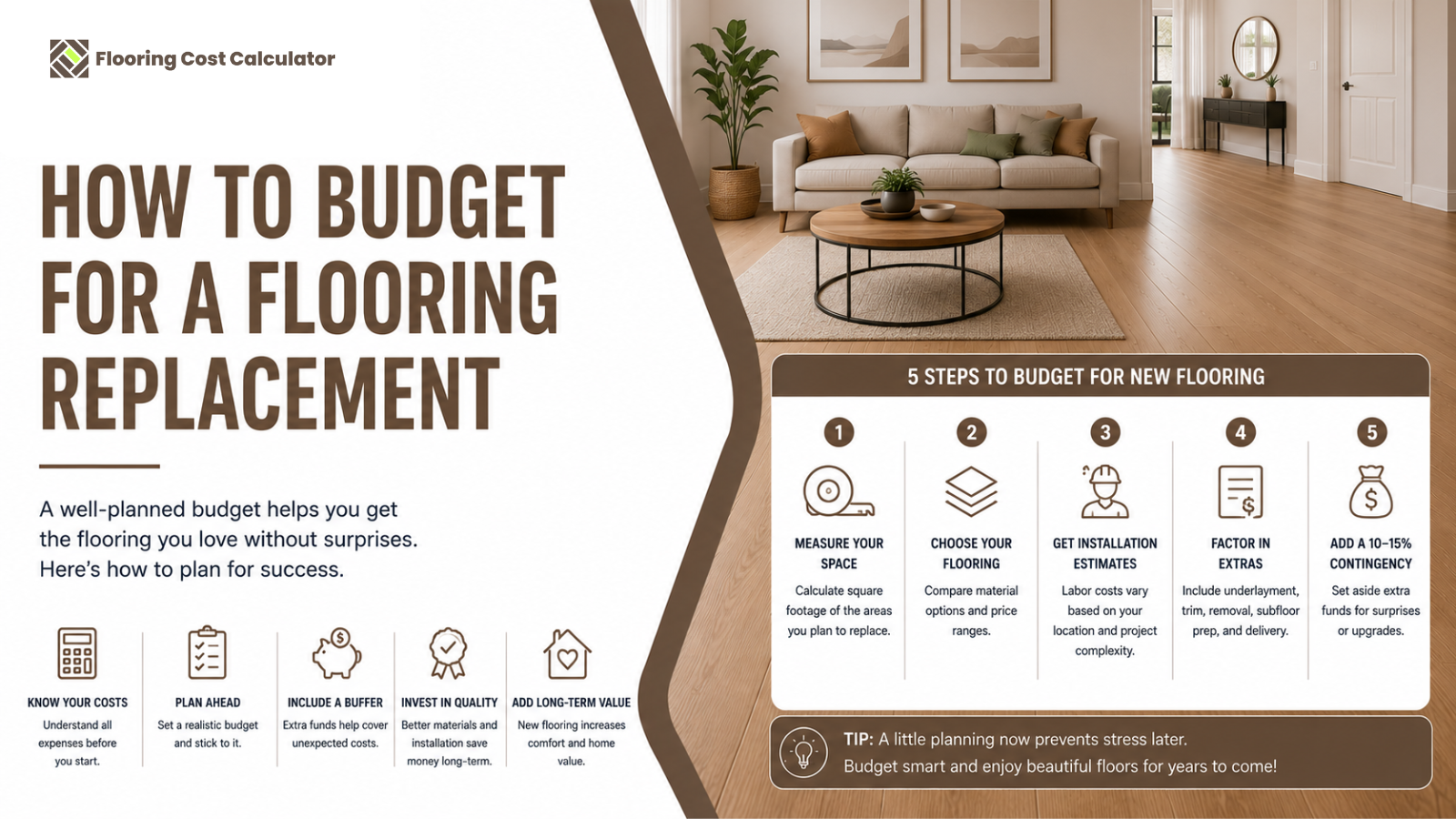
To budget for a flooring replacement:
- Measure the total installation area.
- Choose your preferred flooring material.
- Calculate material costs.
- Include additional material for cuts and waste.
- Estimate professional installation labor.
- Add existing flooring removal and disposal costs.
- Budget for subfloor preparation and possible repairs.
- Include underlayment and installation supplies.
- Consider furniture and appliance moving costs.
- Account for baseboards, trim, and transitions.
- Include delivery and other project expenses.
- Set aside a contingency fund for unexpected work.
The total cost of a flooring project depends on the material, square footage, installation complexity, local labor rates, and condition of the existing floor and subfloor.
Start by Measuring the Flooring Area
The first step in creating a flooring budget is determining how much flooring you need.
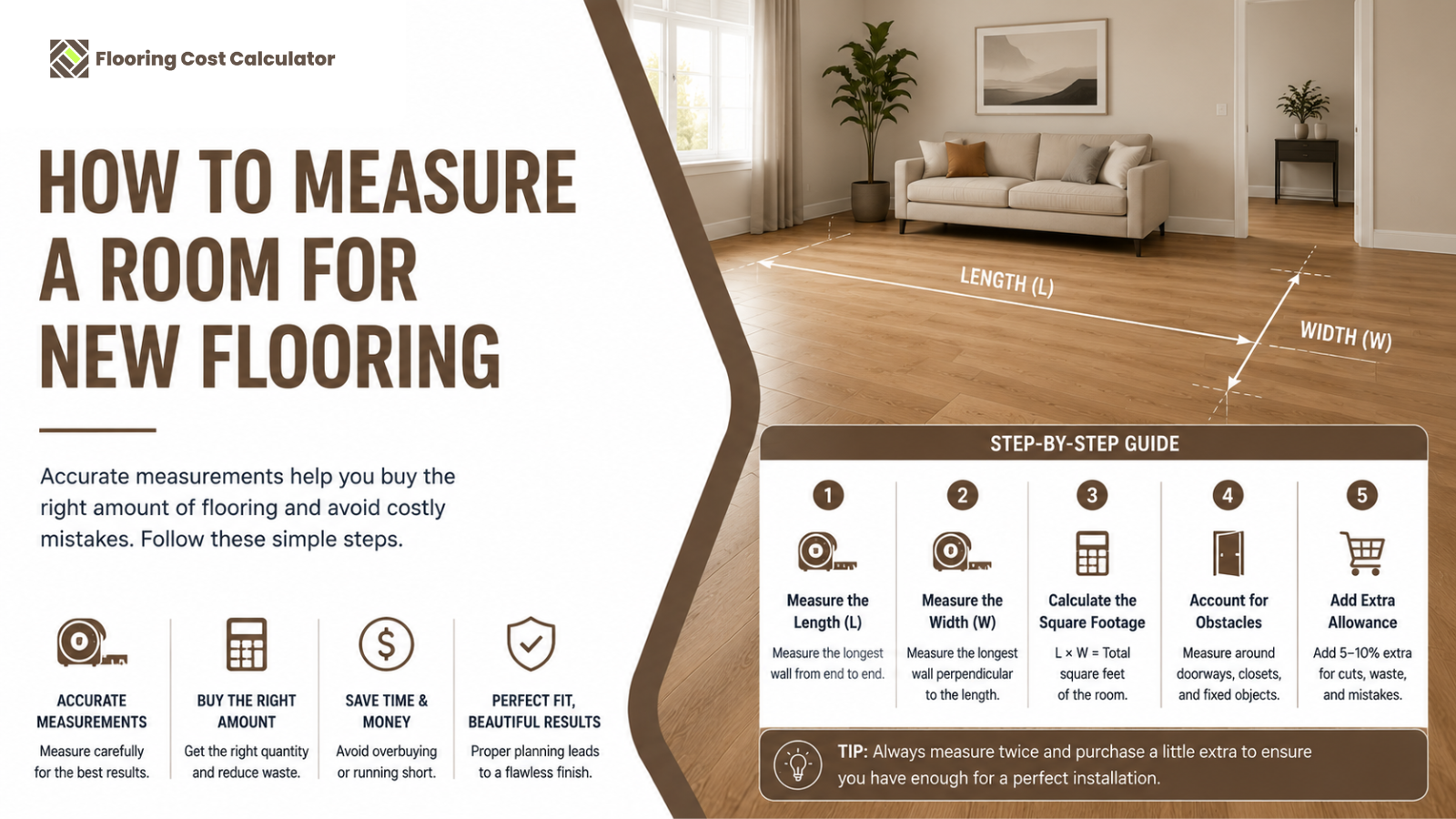
For a simple rectangular room, calculate the area by multiplying:
Length × Width = Square Feet
For example, a room measuring 15 feet long and 12 feet wide contains:
15 × 12 = 180 square feet
If your project includes multiple rooms, calculate each area separately and then add them together.
Remember to include spaces such as:
- Closets
- Hallways
- Alcoves
- Entryways
- Connected rooms
Irregularly shaped rooms may need to be divided into smaller rectangular sections for easier measurement.
Accurate measurements are essential because even a small error can affect both material quantities and your overall budget.
Don't Budget for the Exact Square Footage Alone
If your home requires 1,000 square feet of new flooring, purchasing exactly 1,000 square feet of material may not be enough.
Additional flooring is typically required to account for:
- Cutting
- Waste
- Damaged pieces
- Pattern alignment
- Irregular room shapes
- Installation mistakes
- Future repairs
The appropriate amount of extra material varies depending on the flooring type and installation pattern.
Straightforward room layouts may require less additional material, while diagonal installations, complex tile patterns, or irregular spaces can create more waste.
Ask your installer or flooring supplier to recommend an appropriate waste allowance for your specific project.
Including this additional material in your original budget helps prevent shortages during installation.
Choose Your Flooring Material Early
Material selection is one of the biggest factors affecting the cost of a flooring replacement.
Popular flooring options include:
- Carpet
- Laminate
- Luxury vinyl plank
- Engineered hardwood
- Solid hardwood
- Ceramic tile
- Porcelain tile
Each material has a different purchase price, installation method, maintenance requirement, and expected lifespan.
When comparing materials, consider more than the price per square foot.
Also think about:
- Durability
- Water resistance
- Scratch resistance
- Maintenance
- Comfort
- Appearance
- Repairability
- Expected lifespan
A less expensive material may reduce your initial investment, while a more durable product may provide better long-term value.
The right choice depends on your budget and how the room will be used.
Separate Material Cost From Installation Cost
When researching flooring prices, make sure you understand whether the advertised price includes installation.
A flooring product advertised at a certain price per square foot may represent only the material.
Your total project cost may also include:
- Installation labor
- Underlayment
- Adhesive
- Fasteners
- Existing flooring removal
- Disposal
- Subfloor preparation
- Trim
- Transitions
For accurate budgeting, separate your project into individual cost categories.
This makes it easier to understand where your money is going and compare contractor estimates fairly.
Budget for Professional Installation
Labor can represent a significant portion of the total flooring replacement cost.
Installation costs depend on factors such as:
- Flooring material
- Room size
- Installation method
- Room shape
- Pattern complexity
- Number of rooms
- Stairs
- Site accessibility
- Local labor rates
A simple floating laminate or luxury vinyl plank installation may require less labor than a detailed tile pattern or traditional hardwood installation.
Complex projects may also require specialized installers.
When comparing materials, consider both the material price and the cost of installation.
An affordable material with complicated installation requirements may cost more overall than expected.
Include Existing Flooring Removal
Before new flooring can be installed, the existing material may need to be removed.
Removal costs vary depending on what is currently installed.
Common flooring materials that may require removal include:
- Carpet
- Laminate
- Vinyl
- Luxury vinyl plank
- Hardwood
- Tile
Some materials are easier to remove than others.
Carpet removal may be relatively straightforward, while removing tile can require significant labor, specialized tools, and additional cleanup.
Ask contractors whether flooring removal is included in their installation quote or charged separately.
Don't Forget Disposal Costs
Removing old flooring creates construction debris that must be disposed of properly.
Potential disposal expenses may include:
- Contractor disposal fees
- Dumpster rental
- Hauling
- Landfill or transfer station fees
Some flooring contractors include disposal in their removal price, while others charge separately.
When requesting estimates, ask specifically:
"Does this quote include removal and disposal of my existing flooring?"
This simple question can help prevent unexpected charges.
Prepare for Subfloor Work
The condition of your subfloor can significantly affect the final cost of a flooring replacement.
Potential subfloor issues include:
- Uneven surfaces
- Moisture damage
- Rot
- Loose panels
- Cracks
- Squeaking
- Adhesive residue
- Structural movement
Some problems may not become visible until the existing flooring is removed.
Depending on the condition of the subfloor, preparation may involve:
- Patching
- Leveling
- Grinding
- Replacing damaged sections
- Securing loose panels
- Removing old adhesive
- Moisture mitigation
Because these costs can be difficult to predict in advance, your flooring budget should include some flexibility.
Budget for Floor Leveling
Many flooring products require a relatively flat installation surface.
If the subfloor contains significant high or low areas, contractors may need to perform additional preparation.
This can include:
- Grinding high spots
- Filling low areas
- Applying leveling products
- Repairing damaged sections
The amount of work required depends on the existing condition of the floor.
Large areas requiring significant leveling can increase both material and labor costs.
Ask your contractor how floor preparation is priced and whether the initial estimate includes a basic allowance.
Consider Moisture Testing and Mitigation
Moisture problems can create serious flooring failures if they are not addressed before installation.
Depending on the flooring material and subfloor, your project may require:
- Moisture testing
- Vapor barriers
- Moisture-resistant underlayment
- Waterproofing
- Moisture mitigation products
This is particularly important for certain installations over concrete slabs or in moisture-prone areas.
If your home has experienced previous leaks, flooding, or moisture problems, discuss these concerns with your flooring professional before finalizing your budget.
Correcting moisture problems before installation is generally far less expensive than replacing a damaged floor later.
Include Underlayment in Your Budget
Some flooring systems require underlayment beneath the finished surface.
Depending on the product, underlayment may help with:
- Sound reduction
- Moisture protection
- Thermal performance
- Support
- Comfort
Not every flooring product requires separate underlayment.
Some flooring includes an attached backing, while other products require a specific underlayment approved by the manufacturer.
Ask whether underlayment is included in the material or installation quote.
Budget for Baseboards and Trim
Flooring replacement may affect the trim around the perimeter of the room.
Depending on the installation, you may need to budget for:
- Baseboard removal
- Baseboard reinstallation
- New baseboards
- Quarter-round
- Shoe molding
- Painting or touch-ups
Some installers remove and reinstall existing trim, while others install flooring with the baseboards remaining in place and add shoe molding afterward.
If you already plan to update your baseboards, coordinating the work with your flooring replacement may be more efficient.
Include Flooring Transitions
Transitions are used where flooring materials or heights change.
You may need transition pieces between:
- Bedrooms and hallways
- Kitchens and living rooms
- Bathrooms and hallways
- Carpet and hard flooring
- Tile and hardwood
- Flooring and exterior doors
Transition pieces may seem like a minor expense, but a home with multiple rooms can require several.
Make sure your contractor estimate identifies whether transitions are included.
Consider Stairs Separately
Stairs can significantly increase flooring installation costs.
Installing flooring on stairs often requires:
- Additional cutting
- Individual tread installation
- Stair nosing
- Risers
- Specialized trim
- Additional labor
Do not assume that the cost per square foot for a standard room will apply equally to a staircase.
If your project includes stairs, request separate pricing for this portion of the installation.
Budget for Furniture Moving
Rooms usually need to be cleared before installation begins.
You may need to move:
- Sofas
- Beds
- Tables
- Dressers
- Desks
- Bookshelves
- Entertainment centers
Some flooring companies include basic furniture moving, while others charge additional fees.
Heavy or specialty items may require separate professional movers.
You can potentially reduce costs by moving smaller furniture yourself before the installation crew arrives.
Plan for Appliance Moving
Kitchen, laundry room, and utility area installations may require moving appliances.
These may include:
- Refrigerators
- Washing machines
- Dryers
- Freestanding ranges
Certain appliances may require professional disconnection and reconnection when plumbing, gas, or specialized electrical connections are involved.
Ask your flooring contractor which appliances they will move and which require separate arrangements.
Consider Door Adjustments
New flooring may be thicker than the flooring being replaced.
This can affect:
- Interior doors
- Closet doors
- Exterior door clearance
Some doors may need to be trimmed or adjusted after installation.
Although this may represent a relatively small part of the total budget, it is another potential expense homeowners sometimes overlook.
Account for Material Delivery
Depending on where you purchase your flooring, delivery may or may not be included.
Potential charges can include:
- Standard delivery
- Large-order delivery
- Special handling
- Difficult property access
For large flooring projects, materials can be heavy and difficult to transport without an appropriate vehicle.
Confirm delivery charges before placing your order.
Build a Contingency Fund
One of the most important parts of a flooring budget is a contingency fund.
Unexpected conditions may appear after demolition begins.
Examples include:
- Hidden water damage
- Subfloor rot
- Uneven surfaces
- Multiple layers of old flooring
- Difficult adhesive removal
- Unexpected floor height issues
- Additional trim work
Setting aside approximately 10% to 20% of the planned project budget can provide financial flexibility for unexpected work.
Projects involving older homes, known moisture issues, or extensive renovations may justify a larger contingency.
If the additional money is not needed, you simply finish the project under your maximum budget.
Create a Complete Flooring Budget
Instead of thinking only about flooring material, organize your budget into categories.
A complete flooring replacement budget might include:
| Budget Category | What It May Include |
|---|---|
| Flooring Material | Planks, boards, tile, or carpet |
| Extra Material | Cuts, waste, and future repairs |
| Installation Labor | Professional flooring installation |
| Old Flooring Removal | Demolition and removal |
| Disposal | Hauling and disposal fees |
| Subfloor Preparation | Patching, leveling, or repairs |
| Underlayment | Required installation layer |
| Moisture Protection | Barriers or mitigation |
| Trim | Baseboards, shoe molding, quarter-round |
| Transitions | Doorways and flooring changes |
| Furniture Moving | Clearing installation areas |
| Appliance Moving | Kitchens and laundry rooms |
| Delivery | Transportation of materials |
| Contingency | Unexpected project expenses |
Creating a budget in this format gives you a more realistic picture of the complete investment.
Compare Contractor Estimates Carefully
When collecting flooring estimates, avoid comparing only the final price.
One contractor may appear less expensive because their quote excludes services included by another contractor.
Compare:
- Flooring installation
- Existing floor removal
- Disposal
- Subfloor preparation
- Furniture moving
- Appliance moving
- Underlayment
- Trim
- Transitions
- Cleanup
- Warranty
Ask contractors to provide written estimates with clearly defined scopes of work.
This makes it easier to identify genuine price differences.
Avoid Choosing Based Only on the Lowest Price
Budgeting responsibly does not necessarily mean selecting the least expensive contractor.
A very low estimate may indicate that important preparation work has been excluded.
Poor installation can lead to:
- Uneven flooring
- Gaps
- Movement
- Buckling
- Cracked tile
- Adhesive failure
- Premature replacement
Quality installation is an important part of protecting your investment.
Look for a contractor who provides clear pricing, explains preparation requirements, and has experience installing your selected flooring material.
Ways to Reduce Flooring Replacement Costs
There are several ways homeowners may be able to reduce costs without sacrificing installation quality.
Consider:
- Moving furniture yourself.
- Removing easy-to-handle existing flooring if appropriate.
- Choosing a moderately priced flooring material.
- Keeping the installation pattern simple.
- Reusing baseboards when practical.
- Comparing multiple contractor estimates.
- Purchasing materials during promotions.
- Replacing flooring in phases.
However, avoid cutting costs on essential preparation work.
Skipping moisture mitigation, subfloor repairs, or necessary leveling can create expensive problems later.
Consider Replacing Flooring in Phases
If replacing flooring throughout the entire home exceeds your current budget, completing the project in phases may be an option.
For example, you might begin with:
- Main living areas.
- Bedrooms.
- Hallways.
- Additional rooms.
Phased installation can spread costs over a longer period.
However, if you want the same flooring throughout connected areas, consider purchasing enough material for the entire project at once.
Flooring colors and styles can be discontinued, and manufacturing batches may sometimes have slight variations.
Think About Long-Term Value
The least expensive flooring is not always the most economical over the life of the home.
When comparing options, consider:
- Purchase price
- Installation cost
- Maintenance
- Durability
- Repairability
- Expected lifespan
A higher-quality material that lasts significantly longer may provide better long-term value.
On the other hand, premium flooring may not be necessary for every room.
Matching the material to the room's use can help you allocate your budget more effectively.
Sample Flooring Replacement Budget
Imagine a homeowner replacing 800 square feet of flooring.
Their budget may include:
- Flooring materials
- Additional material for waste
- Professional installation
- Existing flooring removal
- Disposal
- Underlayment
- Subfloor preparation
- Transitions
- Trim
- Furniture moving
- Contingency fund
Rather than calculating only:
800 sq ft × flooring material price
the homeowner should estimate each category separately.
This approach provides a much more accurate picture of the project's likely total cost.
Common Flooring Budgeting Mistakes
Homeowners can avoid many unexpected expenses by watching for common budgeting mistakes.
These include:
- Budgeting only for flooring material.
- Forgetting installation labor.
- Measuring incorrectly.
- Ordering too little flooring.
- Ignoring waste requirements.
- Forgetting removal and disposal.
- Assuming the subfloor needs no work.
- Ignoring moisture problems.
- Forgetting trim and transitions.
- Overlooking furniture or appliance moving.
- Failing to include a contingency fund.
- Comparing contractor quotes without comparing scope.
A detailed budget prepared before installation begins can help prevent most of these problems.
Questions to Ask Before Finalizing Your Budget
Before committing to a flooring project, ask:
- What is my total installation area?
- How much additional material should I purchase?
- Is flooring removal included?
- Is disposal included?
- What happens if subfloor damage is discovered?
- Does the floor need leveling?
- Is underlayment included?
- Are transitions included?
- Is trim work included?
- Who moves furniture?
- Who moves appliances?
- Are delivery fees included?
- What expenses could result in additional charges?
Getting clear answers can make your flooring budget much more reliable.
Frequently Asked Questions
How much should I budget for new flooring?
The amount depends on your project's square footage, selected material, installation method, local labor rates, and the condition of your existing flooring and subfloor.
Calculate materials and labor first, then add removal, disposal, preparation, trim, transitions, and other project-specific expenses.
Should I include extra money in my flooring budget?
Yes.
A contingency fund of approximately 10% to 20% can help cover unexpected conditions discovered during the project.
Older homes or properties with known flooring problems may require additional flexibility.
What is the most commonly overlooked flooring expense?
Subfloor preparation is one of the most commonly overlooked costs.
Problems such as uneven surfaces, moisture damage, rot, cracks, or old adhesive may not become visible until the existing flooring is removed.
Is flooring removal included in installation?
Not always.
Some contractors include removal and disposal in their estimates, while others charge separately.
Always confirm what is included before accepting a quote.
Can I save money by removing my own flooring?
Possibly.
Removing certain flooring materials yourself may reduce labor costs.
However, difficult materials such as tile can require significant effort and specialized equipment.
Discuss DIY removal with your installer before beginning to ensure you do not damage the subfloor.
Should I buy extra flooring?
Generally, yes.
Additional flooring is usually required for cuts and waste.
The appropriate amount depends on the flooring material, installation pattern, and room layout.
Your installer or supplier can recommend the correct quantity.
Should I replace all my flooring at once?
Not necessarily.
Replacing flooring in phases can make a large project easier to manage financially.
However, purchasing material at different times can create availability or color-matching challenges.
How many contractor estimates should I get?
Obtaining multiple estimates is generally a good idea.
Compare not only prices but also the scope of work, preparation methods, warranties, and included services.
Final Verdict
Creating a realistic flooring replacement budget requires looking beyond the advertised price of the flooring material.
Your total investment may include material, additional flooring for waste, professional installation, demolition, disposal, subfloor preparation, underlayment, moisture protection, trim, transitions, furniture moving, appliance handling, and delivery.
Unexpected conditions can also affect the final price.
Subfloor damage, moisture problems, uneven surfaces, and hidden flooring layers are sometimes discovered only after demolition begins. Including a contingency fund gives you greater flexibility if additional work becomes necessary.
The best flooring budget is detailed enough to account for the entire project while leaving room for unexpected expenses.
By measuring carefully, comparing materials, requesting detailed contractor estimates, and prioritizing proper preparation, you can make informed decisions about where to spend and where to save.
Final Thoughts
Replacing flooring is a substantial home improvement, but careful budgeting can make the process much more predictable.
Start with accurate measurements and a realistic material budget, then consider every stage of the project—from removing the existing floor to completing the final trim. Ask contractors exactly what their estimates include and how unexpected preparation work will be priced.
While reducing unnecessary expenses is important, avoid sacrificing essential subfloor preparation or installation quality simply to achieve the lowest initial price. A properly prepared and professionally installed floor is more likely to provide reliable performance and better long-term value.
Before requesting contractor estimates, use the Flooring Cost Calculator on the homepage to estimate your project's cost based on your room size, selected flooring material, and state. A personalized estimate can help you establish a realistic starting budget, compare flooring options, and evaluate contractor quotes with greater confidence before moving forward with your flooring replacement project.