 Flooring Cost Calculator
Introduction
Tile flooring is one of the most durable and versatile flooring options available to homeowners. It is commonly installed in kitchens, bathrooms, entryways, laundry rooms, mudrooms, and other areas where moisture resistance and easy maintenance are important. With an enormous selection of colors, sizes, textures, patterns, and materials available, tile can complement almost any interior design style.
However, the cost of installing tile flooring can vary considerably from one project to another.
The tile itself represents only one part of the total investment. Professional labor, existing flooring removal, subfloor preparation, underlayment, waterproofing, setting materials, grout, and the complexity of the installation pattern can all influence the final project price.
A straightforward ceramic tile installation in a small rectangular room may be relatively affordable, while a large-format porcelain tile, natural stone, or intricate decorative installation can cost significantly more.
Tile installation also tends to be more labor-intensive than installing some floating flooring products. Proper surface preparation is particularly important because tile requires a stable foundation. Problems beneath the finished floor can contribute to cracked tiles, damaged grout, or premature failure.
Understanding the complete cost of a tile flooring project can help you establish a realistic budget before comparing contractor estimates.
This guide explains the major factors that affect tile flooring costs, compares popular tile materials, and covers the additional expenses homeowners should consider when planning a new tile installation.
Quick Answer
The total cost of tile flooring depends on factors such as:
- Tile material
- Tile quality
- Room size
- Tile size
- Installation pattern
- Local labor rates
- Existing flooring removal
- Subfloor condition
- Underlayment
- Waterproofing requirements
- Setting materials
- Grout
- Stairs or other complex areas
- Geographic location
A complete tile flooring budget should generally account for:
- Tile material
- Extra tile for cuts and waste
- Installation labor
- Existing flooring removal
- Disposal
- Subfloor preparation
- Underlayment or backer materials
- Waterproofing where required
- Mortar or adhesive
- Grout
- Transitions
- Baseboards or trim
For the most accurate estimate, calculate the total floor area and request itemized contractor quotes that clearly explain which materials and services are included.
How Much Does Tile Flooring Cost?
Tile flooring costs vary widely because the category includes everything from affordable ceramic products to premium porcelain and luxury natural stone.
The total installed cost can generally be divided into two major categories:
Material costs and installation costs.
Material expenses may include:
- Tile
- Underlayment
- Backer board
- Mortar
- Grout
- Waterproofing materials
- Trim pieces
- Transitions
Installation expenses may include:
- Labor
- Existing flooring removal
- Disposal
- Subfloor repairs
- Surface leveling
- Tile cutting
- Pattern layout
Because tile installations can vary significantly in complexity, comparing material prices alone does not provide an accurate picture of the total project investment.
A relatively inexpensive tile installed in a complex pattern may cost more overall than a premium tile installed in a simple layout.
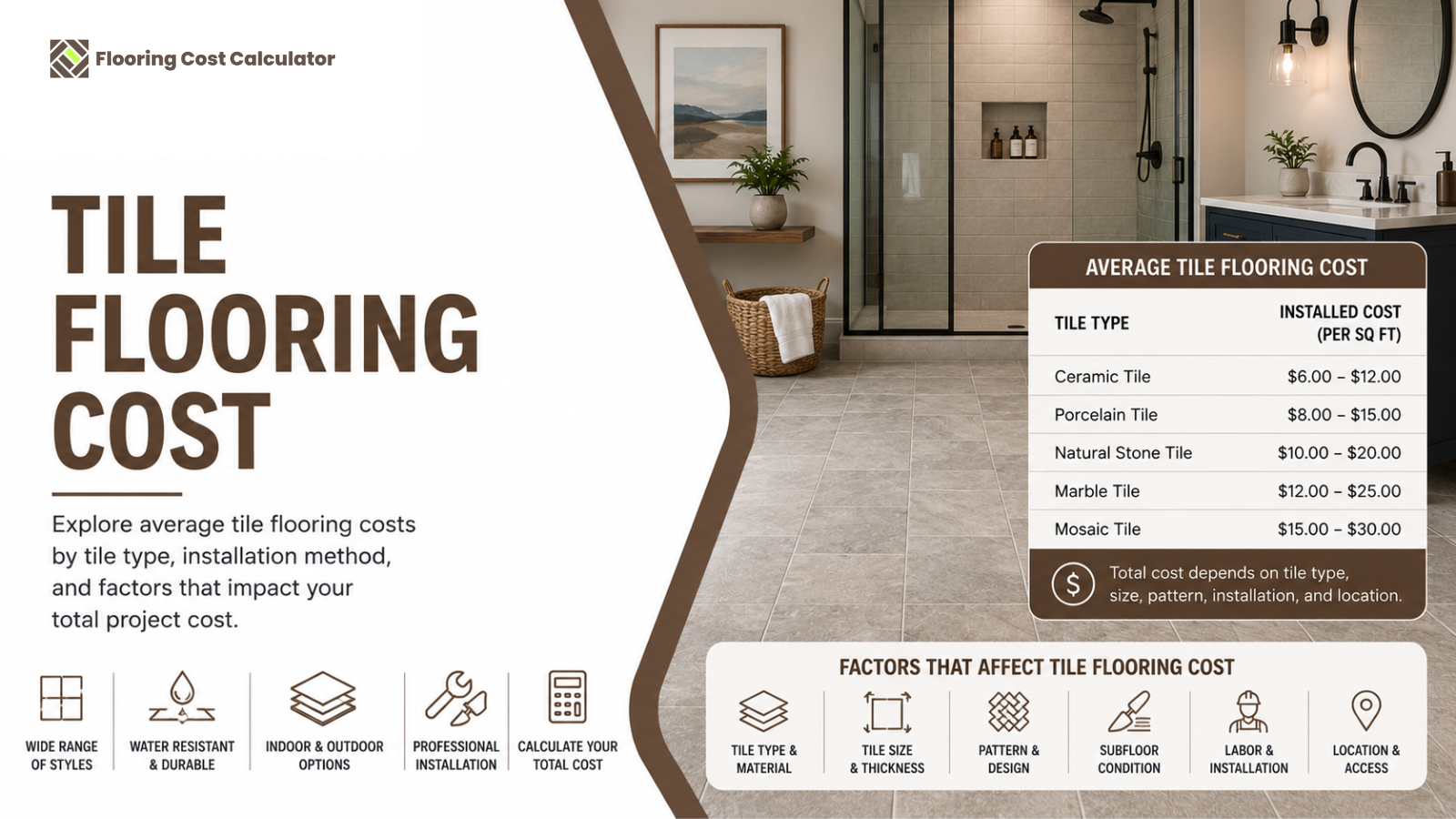
Tile Flooring Cost Per Square Foot
Tile is typically priced by the square foot.
However, the advertised material price is only the beginning of the project budget.
The final installed cost per square foot depends on:
- Type of tile
- Tile dimensions
- Room layout
- Installation pattern
- Subfloor condition
- Labor rates
Standard ceramic tiles installed in a straightforward pattern generally represent one of the more affordable tile flooring options.
Porcelain tile may cost more depending on the product and can require additional labor because it is dense and may be more difficult to cut.
Natural stone can increase costs further because of material pricing, installation requirements, and potential sealing or maintenance considerations.
Decorative or specialty tile can also increase the project price considerably.
Ceramic Tile Cost
Ceramic tile is one of the most widely used residential flooring materials.
It is manufactured from clay and other natural materials that are shaped and fired.
Ceramic tile is available in an enormous variety of:
- Colors
- Sizes
- Patterns
- Textures
- Finishes
Advantages of Ceramic Tile
Ceramic tile can provide:
- Good durability
- Moisture resistance
- Easy routine cleaning
- Wide design selection
- Relatively affordable material options
It is commonly installed in:
- Bathrooms
- Kitchens
- Laundry rooms
- Entryways
Ceramic tile can be an excellent option for homeowners who want a durable hard-surface floor while controlling material costs.
However, product quality varies considerably, so homeowners should choose tile rated appropriately for floor installation and the expected level of traffic.
Porcelain Tile Cost
Porcelain is a type of ceramic tile manufactured using materials and processes that create a dense, durable product.
It is widely used in residential flooring because of its:
- Durability
- Moisture resistance
- Design versatility
- Long lifespan
Porcelain tile is available in styles designed to resemble:
- Natural stone
- Marble
- Concrete
- Hardwood
Wood-look porcelain tile has become particularly popular among homeowners who want the visual appearance of wood combined with tile's moisture resistance.
Why Porcelain May Cost More
Porcelain tile may have a higher material price than basic ceramic tile.
Installation costs may also be higher because dense porcelain can be more difficult to:
- Cut
- Drill
- Shape
Specialized tools may be required.
However, porcelain's durability can make it an attractive long-term investment for high-traffic and moisture-prone areas.
Natural Stone Tile Cost
Natural stone is generally considered a premium flooring option.
Common stone materials include:
- Marble
- Granite
- Travertine
- Slate
- Limestone
Each material provides unique:
- Color variation
- Texture
- Veining
- Natural character
No two natural stone installations are exactly identical.
Advantages of Natural Stone
Natural stone may provide:
- Premium appearance
- Unique design
- Excellent durability
- Long potential lifespan
However, it generally requires a larger project budget.
Certain stone materials may also require:
- Sealing
- Specialized cleaning
- Additional maintenance
Installation may be more complex because natural stone can vary in thickness, shape, or surface characteristics.
Homeowners considering stone should evaluate both the initial installation price and long-term maintenance requirements.
Tile Quality Affects Cost
Two tiles that appear similar can have significantly different prices.
Factors influencing tile cost may include:
- Manufacturing quality
- Material
- Thickness
- Finish
- Size
- Brand
- Design
- Surface texture
Premium tiles may provide:
- More consistent dimensions
- Higher-quality finishes
- Greater design detail
- Improved durability
However, the most expensive tile is not automatically necessary for every project.
The selected tile should be appropriate for:
- Floor use
- Expected traffic
- Moisture conditions
- Interior or exterior installation
Always check manufacturer specifications before purchasing.
Tile Size Can Affect Installation Cost
Tile dimensions can influence both appearance and installation complexity.
Common options range from small mosaic tiles to large-format tiles.
Small Tiles
Smaller tiles may require:
- More grout lines
- More individual placement
- Additional installation time
Mosaic tile is often supplied on mesh sheets, but careful alignment is still important.
Large-Format Tiles
Large tiles can create a modern appearance with fewer visible grout lines.
However, they generally require a particularly flat and well-prepared substrate.
Uneven floors can make large-format tile installation more difficult.
Large tiles may also require specialized cutting and handling.
As a result, choosing a larger tile does not necessarily reduce installation costs.
Tile Installation Labor Cost
Labor can represent a significant portion of the total tile flooring budget.
Tile installation is a multi-stage process that may involve:
- Removing existing flooring
- Preparing the subfloor
- Planning the layout
- Cutting tiles
- Applying setting material
- Installing tiles
- Allowing the installation to set
- Applying grout
- Cleaning the finished surface
Professional installers must also account for:
- Doorways
- Corners
- Cabinets
- Fixtures
- Transitions
Complex rooms generally require more cuts and additional installation time.
Local labor rates also influence the final price.
Why Tile Installation Can Cost More Than Other Flooring
Tile installation can be more labor-intensive than installing certain floating floors.
For example, many laminate and luxury vinyl plank products use click-lock systems that allow large sections of flooring to be installed relatively quickly.
Tile must typically be positioned individually.
The installation process also requires careful attention to:
- Spacing
- Alignment
- Level surfaces
- Pattern consistency
Once the tile is installed, grout must usually be applied and finished.
Additional curing or waiting time may also be required before the floor is ready for regular use.
These factors contribute to higher labor costs for many tile projects.
Existing Flooring Removal
Existing flooring may need to be removed before tile installation begins.
The cost depends on the material being removed.
Examples include:
- Carpet
- Vinyl
- Laminate
- Hardwood
- Existing tile
Removing old tile can be particularly labor-intensive.
The process may require:
- Breaking the existing tile
- Removing mortar
- Cleaning the substrate
- Leveling the surface
Disposal can also add to the project cost because tile and mortar debris are relatively heavy.
If your project involves removing an existing tile floor, expect demolition to represent a more significant portion of the budget.
Disposal Costs
Construction debris must be removed from the property.
Some contractors include disposal in their estimate.
Others charge separately.
Before accepting a quote, ask whether the price includes:
- Existing flooring removal
- Debris collection
- Hauling
- Disposal fees
An estimate that appears less expensive may exclude these services.
Requesting an itemized quote makes comparisons easier.
Subfloor Preparation
Subfloor preparation is one of the most important parts of tile installation.
Tile requires a stable and appropriately prepared surface.
Potential problems include:
- Uneven areas
- Cracks
- Movement
- Moisture
- Damaged subfloor sections
If these problems are not addressed, the finished tile installation may develop:
- Cracked tiles
- Loose tiles
- Damaged grout
- Uneven surfaces
The amount of preparation required depends on the condition of the existing floor.
Minor preparation may have a relatively small impact on cost.
Major leveling or structural repairs can significantly increase the project budget.
Underlayment and Backer Materials
Depending on the installation, additional materials may be required between the subfloor and tile.
These can include:
- Cement backer board
- Uncoupling membranes
- Other approved tile substrates
The correct system depends on:
- Subfloor material
- Tile type
- Room conditions
- Manufacturer requirements
These materials increase the project cost but can play an important role in the long-term performance of the flooring system.
Professional installers should select a system appropriate for the specific installation.
Waterproofing Costs
Waterproofing can be particularly important in certain areas.
Examples include:
- Bathrooms
- Showers
- Wet rooms
Tile itself may resist water, but that does not mean the entire floor assembly is automatically waterproof.
Water can potentially penetrate:
- Grout joints
- Gaps
- Installation details
Appropriate waterproofing systems may be required depending on the application.
Waterproofing increases material and labor costs but can help protect the underlying structure from moisture damage.
Mortar and Adhesive Costs
Tile requires an appropriate setting material.
The correct product depends on:
- Tile material
- Tile size
- Substrate
- Installation location
Large-format tile or natural stone may have different requirements from standard ceramic tile.
Although mortar may represent a relatively small portion of the total project cost, using the correct product is important for long-term performance.
Grout Costs
Grout fills the joints between tiles.
It is available in different:
- Types
- Colors
- Performance levels
Grout selection can affect both:
- Appearance
- Maintenance
Some grout products may cost more but offer improved performance characteristics.
Grout color also influences the appearance of the finished floor.
A contrasting grout can emphasize the tile pattern, while a similar color creates a more uniform appearance.
Installation Pattern Affects Cost
The pattern used to install tile can significantly influence labor costs.
Simple layouts generally require less time and fewer complex cuts.
More elaborate patterns may include:
- Diagonal layouts
- Herringbone
- Chevron
- Basketweave
- Custom borders
These designs can require:
- More planning
- Additional cutting
- More material
- Greater installation time
If controlling costs is a priority, a straightforward layout is generally more economical.
Pattern Matching and Decorative Tile
Some tile products include designs that need to align across multiple pieces.
Pattern matching can increase:
- Material waste
- Installation time
Decorative borders and accent tiles can also increase costs.
These features may create an attractive custom appearance but should be included in the budget from the beginning.
How Much Extra Tile Should You Buy?
Homeowners should generally purchase more tile than the exact measured floor area.
Extra material accounts for:
- Cuts
- Breakage
- Waste
- Pattern layout
- Future repairs
The appropriate amount depends on the project.
Straightforward rectangular rooms using a simple pattern may require less extra material than complex layouts.
Diagonal or intricate patterns generally produce more waste.
Keeping leftover tiles after installation is highly recommended.
If a tile becomes damaged years later, finding an exact replacement can be difficult if the product has been discontinued.
Tile Cost for Bathrooms
Bathrooms are among the most common rooms for tile flooring.
Tile is popular because it provides:
- Moisture resistance
- Durability
- Easy cleaning
- Design flexibility
However, bathroom projects can include additional costs related to:
- Waterproofing
- Fixtures
- Toilets
- Complex cuts
Small bathrooms do not always have low installation costs per square foot because contractors still need to complete detailed preparation and cutting.
Tile Cost for Kitchens
Tile is also widely used in kitchens.
Kitchen flooring must withstand:
- Heavy traffic
- Spills
- Food debris
- Frequent cleaning
Installation complexity may increase because tiles need to be fitted around:
- Cabinets
- Islands
- Doorways
Porcelain and ceramic tile are both popular kitchen flooring options.
The best choice depends on your budget, design preferences, and performance requirements.
Tile Cost for Entryways
Entryways experience significant daily wear.
Floors may be exposed to:
- Dirt
- Water
- Mud
- Outdoor debris
Tile can provide an excellent combination of durability and easy cleaning.
Porcelain tile is particularly popular for high-traffic areas.
The project cost depends on the entryway size, tile selection, and existing floor condition.
Tile Cost for Laundry Rooms
Laundry rooms may experience occasional moisture from:
- Washing machines
- Utility sinks
- Plumbing
Tile can provide a durable flooring surface for these areas.
However, proper preparation remains essential.
If water exposure is a concern, discuss waterproofing and drainage considerations with your contractor.
Tile Cost for Mudrooms
Mudrooms are demanding spaces.
They may experience:
- Wet shoes
- Mud
- Snow
- Pet traffic
- Frequent cleaning
Durable porcelain or ceramic tile can perform well in these conditions.
Homeowners should prioritize:
- Slip resistance
- Durability
- Easy maintenance
A highly polished tile may not always be the most practical option for areas frequently exposed to water.
Tile vs. Hardwood Cost
Hardwood and tile can both represent significant flooring investments.
Hardwood costs depend on:
- Wood species
- Grade
- Finish
- Installation
Tile costs depend on:
- Tile material
- Layout
- Surface preparation
- Labor
Hardwood offers natural warmth and potential refinishing.
Tile provides stronger moisture resistance.
The better choice depends on the room and your priorities.
Tile vs. Luxury Vinyl Plank Cost
Luxury vinyl plank may have lower installation costs in many projects because click-lock systems can be relatively fast to install.
Tile typically requires more labor and preparation.
However, tile may provide:
- Longer potential lifespan
- Excellent moisture resistance
- Strong wear resistance
LVP may provide:
- Lower installation complexity
- Softer feel underfoot
- Faster installation
Compare both initial costs and long-term expectations.
Tile vs. Laminate Cost
Laminate is generally easier and faster to install than tile.
This can result in lower labor costs.
Tile may cost more initially but provides advantages in moisture-prone environments.
For bathrooms and other wet areas, tile may be the more appropriate long-term solution.
For dry living spaces, laminate may provide a more affordable alternative.
Tile vs. Carpet Cost
Carpet generally offers a lower initial installation cost than many tile projects.
It also provides:
- Softness
- Warmth
- Noise reduction
Tile provides:
- Greater moisture resistance
- Easier spill cleanup
- Longer potential lifespan
The best option depends primarily on the room.
Carpet may be ideal for bedrooms, while tile is often more practical for bathrooms and entryways.
Factors That Affect Tile Flooring Cost
The most important cost factors include:
- Total square footage
- Tile material
- Tile size
- Tile quality
- Installation pattern
- Labor rates
- Existing flooring removal
- Disposal
- Subfloor preparation
- Underlayment
- Waterproofing
- Mortar
- Grout
- Room complexity
- Geographic location
Understanding these variables can help you compare contractor estimates more accurately.
Tile Flooring Cost Factors at a Glance
| Cost Factor | Potential Impact on Price |
|---|---|
| Tile Material | Low to High |
| Tile Quality | Moderate to High |
| Porcelain vs. Ceramic | Moderate |
| Natural Stone | High |
| Large-Format Tile | Moderate to High |
| Complex Pattern | Moderate to High |
| Labor | High |
| Existing Tile Removal | Moderate to High |
| Subfloor Repairs | Low to High |
| Waterproofing | Moderate |
| Underlayment | Low to Moderate |
| Room Complexity | Moderate |
| Geographic Location | Moderate |
The exact impact depends on the individual project.
How to Save Money on Tile Installation
Homeowners can potentially reduce tile flooring costs through careful planning.
Consider:
- Comparing multiple contractor estimates
- Choosing standard-size tiles
- Using a simple installation pattern
- Avoiding unnecessary decorative borders
- Selecting ceramic instead of premium materials
- Completing several rooms as one project
- Purchasing tile during promotions
However, avoid reducing costs by skipping essential preparation.
Proper subfloor preparation and installation are critical to the longevity of a tile floor.
Saving money on preparation may lead to expensive repairs later.
Don't Choose Tile Based Only on Price
The lowest-priced tile is not necessarily the best value.
Consider:
- Room location
- Foot traffic
- Moisture exposure
- Slip resistance
- Durability
- Maintenance
- Expected lifespan
A decorative wall tile, for example, may not be suitable for floor installation.
Always verify that the tile is rated for its intended application.
The right product should balance cost with practical performance.
Common Tile Installation Mistakes
Several mistakes can reduce the lifespan or appearance of tile flooring.
Common examples include:
- Installing over an unstable surface
- Failing to level the substrate
- Ignoring moisture problems
- Using inappropriate setting materials
- Poor tile spacing
- Uneven installation
- Incorrect grout application
- Failing to plan the layout
- Underestimating material requirements
- Choosing unsuitable tile for the location
- Skipping required waterproofing
Professional installation can help reduce these risks, particularly for complex projects.
Questions to Ask Before Choosing Tile
Before selecting tile flooring, ask yourself:
- What is my total budget?
- Where will the tile be installed?
- How much foot traffic does the area receive?
- Is moisture a concern?
- Is waterproofing required?
- Does the subfloor need preparation?
- Do I want ceramic, porcelain, or natural stone?
- What size tile works best for the room?
- Do I want a simple or decorative pattern?
- How much maintenance am I comfortable performing?
- Will existing flooring need to be removed?
- What does the contractor's estimate include?
Answering these questions can help you establish a more realistic project budget.
Frequently Asked Questions
How much does tile flooring cost?
Tile flooring costs vary considerably depending on the tile material, project size, installation pattern, labor rates, and subfloor condition.
The total installed cost should include both materials and labor.
Is porcelain tile more expensive than ceramic tile?
Porcelain may cost more than basic ceramic tile.
It can also require additional installation labor because its dense construction may make cutting more difficult.
However, prices vary widely across both categories.
Is natural stone more expensive than porcelain tile?
Natural stone is often considered a premium material and can cost more to purchase and install.
Certain stone products may also require sealing and specialized maintenance.
Why is tile installation expensive?
Tile installation is labor-intensive.
It requires careful surface preparation, layout planning, cutting, setting, and grouting.
Complex patterns can increase labor costs further.
Is tile cheaper than hardwood?
It depends on the specific materials.
Basic ceramic tile may be less expensive than premium hardwood, while luxury porcelain or natural stone installations can cost considerably more.
Is tile cheaper than luxury vinyl plank?
LVP often has lower installation labor costs.
Tile may require more preparation and installation time.
However, long-term durability should also be considered.
How much extra tile should I buy?
The amount depends on the room layout and installation pattern.
Extra material is generally required for cuts, breakage, and waste.
Complex patterns typically require more additional material.
Should I keep leftover tile?
Yes.
Keeping extra tiles makes future repairs easier if the original product is discontinued.
Can tile be installed over existing flooring?
Sometimes, depending on the existing surface and installation requirements.
The substrate must be stable and appropriate for tile installation.
A professional installer should evaluate the existing floor.
Is tile good for kitchens?
Yes.
Ceramic and porcelain tile are popular kitchen flooring options because of their durability and moisture resistance.
Is tile good for bathrooms?
Yes.
Tile is one of the most popular bathroom flooring materials.
However, proper installation and waterproofing where required are essential.
How long does tile flooring last?
Quality tile can potentially last for decades when properly installed and maintained.
The actual lifespan depends on the material, installation quality, household use, and maintenance.
Final Verdict
Tile flooring can be an excellent long-term investment for homeowners seeking durability, moisture resistance, easy routine maintenance, and extensive design flexibility.
The total cost of a tile project depends on much more than the price of the tile itself.
Labor, existing flooring removal, subfloor preparation, underlayment, waterproofing, setting materials, grout, room complexity, and installation pattern can all have a significant impact on the final project price.
Ceramic tile can provide an affordable and versatile solution for many residential applications.
Porcelain tile offers excellent durability and moisture resistance, making it particularly attractive for demanding areas such as kitchens, bathrooms, entryways, and mudrooms.
Natural stone provides premium beauty and unique character but generally requires a larger initial investment and may involve additional maintenance.
The best choice is the tile that fits your budget, room requirements, design preferences, and long-term expectations.
Final Thoughts
Planning a tile flooring project requires looking beyond the advertised price per square foot.
Start by measuring the installation area carefully and selecting a tile appropriate for the room. Then consider the condition of the existing floor, the required installation system, and whether additional preparation or waterproofing will be necessary.
If you are replacing an existing tile floor, demolition and disposal may represent a significant additional expense. If the subfloor requires leveling or repair, those costs should also be included in your budget.
Installation pattern matters as well. A straightforward tile layout can help control labor and material costs, while intricate patterns, decorative borders, or premium materials can increase the total investment considerably.
When requesting contractor estimates, ask for itemized quotes that explain what is included. This makes it easier to compare labor, preparation, demolition, materials, and other services across multiple contractors.
Before requesting contractor estimates, use the Flooring Cost Calculator on the homepage to estimate your project's cost based on your room size, selected flooring material, and state. A personalized estimate can help you establish a realistic budget, compare tile flooring costs with other materials, and better understand the potential investment required for your flooring replacement project.