 Flooring Cost Calculator
Introduction
Luxury vinyl plank flooring, commonly known as LVP, has become one of the most popular flooring choices for homeowners who want the appearance of natural wood combined with durability, moisture resistance, and relatively easy maintenance.
Modern LVP products are available in a wide variety of colors, textures, plank sizes, and wood-look designs. Some products closely reproduce the appearance of oak, walnut, hickory, and other natural wood species while providing practical advantages that make vinyl flooring suitable for many areas of the home.
However, the cost of installing luxury vinyl plank can vary considerably.
The price of the flooring material itself is only one part of the total project budget. Homeowners may also need to consider professional installation, additional flooring for cuts and waste, removal of existing flooring, disposal, subfloor preparation, underlayment, floor leveling, trim, transitions, and other project-specific expenses.
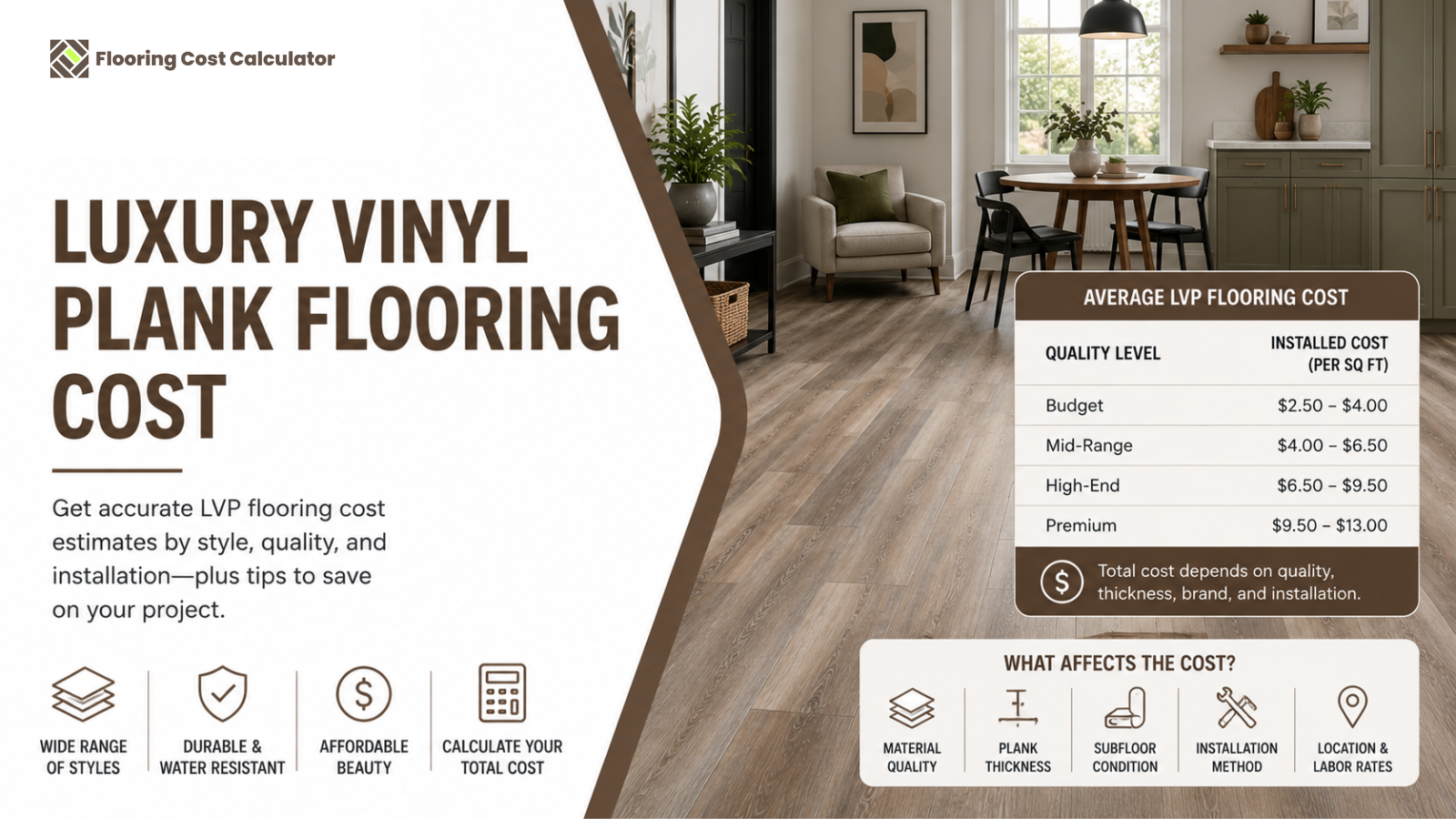
Geographic location can also have a significant impact on the final price. Based on the 2026 state-level pricing used by the Flooring Cost Calculator, estimated installed luxury vinyl plank flooring costs range from approximately $5 to $18 per square foot, depending on the state.
The final price of your project will depend on your location, the quality of the LVP product, installation method, project size, room complexity, and condition of the existing floor.
This guide explains luxury vinyl plank flooring costs, the major factors that influence pricing, and the additional expenses homeowners should consider when creating a realistic LVP installation budget.
Quick Answer
Based on the 2026 state-level pricing used by the Flooring Cost Calculator, estimated installed luxury vinyl plank flooring costs range from approximately:
$5–$18 per square foot
At the lower end of the state-level pricing data, Arkansas and Mississippi have estimated LVP installation costs of approximately:
$5–$9 per square foot
At the higher end, Hawaii has an estimated range of:
$11–$18 per square foot
Other relatively high-cost locations include:
- Alaska: $9.50–$16 per square foot
- California: $9–$15 per square foot
- New York: $9–$15 per square foot
- Massachusetts: $8.50–$14.50 per square foot
- Washington: $8.50–$14.50 per square foot
Actual project costs may vary depending on local labor rates, flooring quality, installation requirements, and the condition of your existing floor.
What Is Luxury Vinyl Plank Flooring?
Luxury vinyl plank is a type of resilient flooring designed primarily to reproduce the appearance of natural wood.
Unlike traditional sheet vinyl, LVP is manufactured as individual planks.
Depending on the product, an LVP plank may include several layers designed to provide:
- Structural stability
- Printed wood-look designs
- Surface protection
- Wear resistance
- Moisture resistance
Many modern products also feature textured surfaces intended to create a more realistic wood appearance.
LVP is available in designs inspired by popular wood species such as:
- Oak
- Maple
- Walnut
- Hickory
Colors can range from light natural wood tones to dark brown, gray, and contemporary neutral finishes.
The wide selection allows homeowners to achieve a wood-look appearance without installing natural hardwood.
What Is Included in LVP Flooring Cost?
When researching luxury vinyl plank prices, homeowners should determine whether the quoted price represents:
- Material only
- Material and installation
- A complete flooring replacement project
These are very different calculations.
A complete LVP flooring project may include:
- LVP flooring material
- Professional installation
- Additional flooring for waste
- Existing flooring removal
- Disposal
- Subfloor preparation
- Floor leveling
- Underlayment
- Moisture protection
- Adhesive for glue-down installations
- Baseboards
- Trim
- Transition strips
- Stair installation
Not every project requires every expense.
However, understanding these potential costs can help you avoid underestimating your flooring budget.
LVP Material Cost vs. Installed Cost
One of the most important distinctions when comparing flooring prices is the difference between material cost and installed cost.
Material Cost
The material price refers only to the LVP flooring product.
The retail price can vary based on:
- Product quality
- Plank thickness
- Wear layer
- Core construction
- Attached backing
- Surface texture
- Brand
A low retail price does not necessarily mean the entire flooring project will be inexpensive.
Installed Cost
Installed cost generally includes the flooring and professional installation labor.
Depending on the contractor or retailer, the price may also include certain basic installation materials.
However, additional charges may still apply for:
- Existing flooring removal
- Disposal
- Subfloor repairs
- Floor leveling
- Moisture remediation
- Trim
- Stairs
Always ask for an itemized estimate before comparing contractor prices.
Luxury Vinyl Plank Flooring Cost Per Square Foot
Based on the 2026 state-level pricing used by the Flooring Cost Calculator, estimated installed LVP costs range from approximately:
$5–$18 per square foot
The wide range reflects differences in:
- Geographic location
- Product quality
- Installation method
- Labor costs
- Project complexity
Many projects may fall somewhere within the middle of this overall range, while premium products or installations in higher-cost markets may approach the upper end.
The best way to create a preliminary budget is to use an estimated price per square foot appropriate for your state and multiply it by your total flooring area.
LVP Flooring Cost by Project Size
The total cost of a luxury vinyl plank installation increases with project size.
Using the broad 2026 state-level range of $5–$18 per square foot, the following examples illustrate potential project costs.
200 Square Feet
At $5 per square foot:
200 × $5 = $1,000
At $18 per square foot:
200 × $18 = $3,600
Estimated range:
$1,000–$3,600
500 Square Feet
At $5 per square foot:
500 × $5 = $2,500
At $18 per square foot:
500 × $18 = $9,000
Estimated range:
$2,500–$9,000
1,000 Square Feet
At $5 per square foot:
1,000 × $5 = $5,000
At $18 per square foot:
1,000 × $18 = $18,000
Estimated range:
$5,000–$18,000
1,500 Square Feet
At $5 per square foot:
1,500 × $5 = $7,500
At $18 per square foot:
1,500 × $18 = $27,000
Estimated range:
$7,500–$27,000
These examples use the complete low-to-high range across all states.
Using your state's specific pricing range will generally provide a more useful estimate.
What Affects Luxury Vinyl Plank Flooring Cost?
Several factors can influence the total cost of an LVP flooring project.
The most important include:
- Flooring quality
- Wear layer
- Product thickness
- Core construction
- Installation method
- Project size
- Geographic location
- Existing flooring removal
- Subfloor condition
- Floor leveling
- Room complexity
- Installation pattern
Understanding these factors makes it easier to compare products and contractor estimates.
How LVP Quality Affects Cost
Not all luxury vinyl plank products are manufactured to the same specifications.
Entry-level products generally cost less than premium LVP.
Higher-priced products may provide differences in:
- Overall thickness
- Surface texture
- Design detail
- Wear layer
- Core construction
- Attached backing
Premium products may also offer more realistic wood-look designs.
When comparing LVP, consider more than the initial material price.
A flooring product should be appropriate for the amount of traffic, moisture exposure, and daily use expected in the room.
How the Wear Layer Affects LVP Cost
The wear layer is the protective surface that helps protect the printed design layer from everyday wear.
Wear layers are available in different thicknesses.
The appropriate product depends on the intended use of the space.
For example, a low-traffic bedroom may have different performance requirements than:
- A busy hallway
- A kitchen
- A family room
- An entryway
Products designed for heavier use may cost more.
However, selecting flooring appropriate for the room can help improve long-term performance.
How Product Thickness Affects Price
LVP products are available in different overall thicknesses.
Thickness alone does not determine flooring quality, but it can influence:
- Underfoot feel
- Installation characteristics
- Product construction
When comparing products, consider thickness together with:
- Wear layer
- Core type
- Installation method
- Manufacturer specifications
A thicker product is not automatically the best option for every project.
Rigid Core LVP Cost
Many modern luxury vinyl plank products feature rigid core construction.
Common core technologies include products marketed as:
- SPC
- WPC
Different core constructions can influence:
- Stability
- Underfoot feel
- Dent resistance
- Product thickness
Prices vary considerably between products.
Rather than choosing based exclusively on the core acronym, homeowners should compare the complete product specifications and determine whether the flooring is appropriate for the intended room.
Click-Lock LVP Installation Cost
Many LVP products use a click-lock installation system.
The planks connect to one another and are typically installed as a floating floor.
Potential advantages include:
- Efficient installation
- No adhesive across the entire floor
- Compatibility with many residential applications
However, click-lock flooring still requires an appropriately prepared subfloor.
Installing a floating floor over an excessively uneven surface can create problems.
Subfloor preparation should therefore be included when calculating the complete project cost.
Glue-Down LVP Installation Cost
Some luxury vinyl plank products are installed using adhesive.
Glue-down installation is commonly used in certain residential and commercial applications.
This method may require:
- Adhesive
- Careful subfloor preparation
- Additional installation labor
The substrate generally needs to be properly prepared before installation.
Imperfections can potentially affect the appearance or performance of the finished floor.
When comparing click-lock and glue-down LVP, consider both material and installation requirements.
Professional LVP Installation Labor
Professional installation represents an important part of the total LVP flooring budget.
Labor costs depend on:
- Installation method
- Project size
- Room layout
- Subfloor condition
- Local contractor rates
A straightforward installation in a large rectangular room may require less labor per square foot than a project involving:
- Multiple small rooms
- Closets
- Narrow hallways
- Angled walls
- Numerous doorways
Geographic location also plays a major role in labor pricing.
Existing Flooring Removal Cost
Before new LVP can be installed, the existing flooring may need to be removed.
Common flooring materials that may require removal include:
- Carpet
- Laminate
- Vinyl
- Hardwood
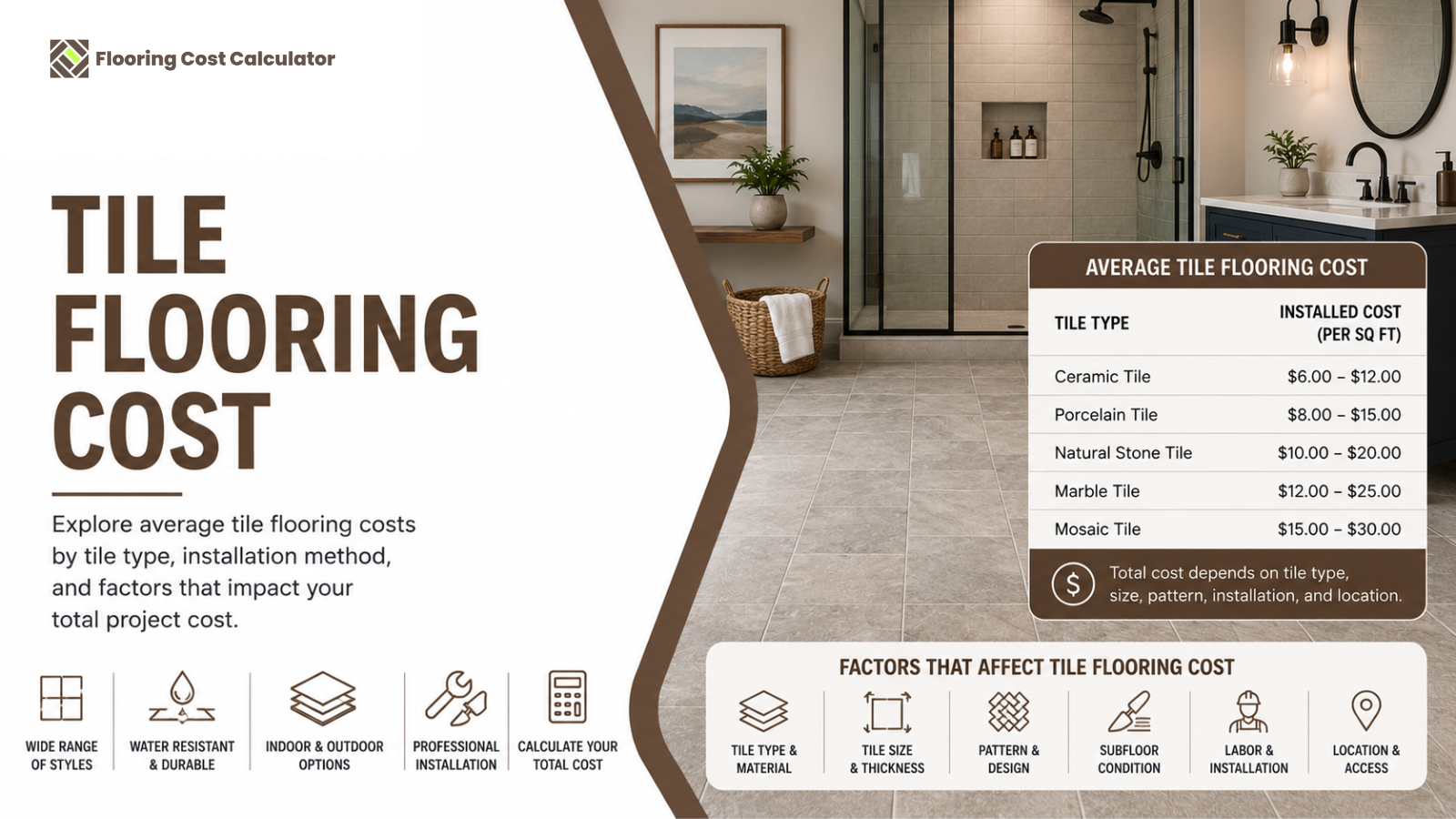
- Tile
Removal difficulty varies considerably.
Carpet may be relatively easy to remove.
Tile can require substantially more demolition because contractors may need to:
- Break the tile
- Remove mortar
- Clean the substrate
- Prepare the surface
Glued flooring can also be time-consuming to remove.
Always ask whether flooring removal is included in your contractor's estimate.
Flooring Disposal Cost
After existing flooring is removed, the debris needs to be disposed of.
Disposal expenses may include:
- Debris handling
- Hauling
- Disposal fees
Some contractors include disposal in the removal price.
Others charge separately.
Ask for clarification before comparing estimates.
A lower removal price may not actually be less expensive if hauling and disposal are additional charges.
Subfloor Preparation Cost
Luxury vinyl plank requires a properly prepared surface.
The subfloor should generally be:
- Clean
- Dry
- Stable
- Appropriately level
Potential problems include:
- Cracks
- Low areas
- High areas
- Loose sections
- Water damage
Subfloor problems should be addressed before installation.
Some issues may not become visible until the existing flooring is removed.
For this reason, homeowners replacing older flooring may want to maintain a contingency for unexpected preparation costs.
Floor Leveling Cost
Although LVP can be relatively flexible in terms of installation locations, the floor beneath it still needs to meet manufacturer requirements.
An uneven floor can potentially create problems for click-lock systems.
Preparation may involve:
- Grinding high spots
- Filling low spots
- Applying leveling materials
The amount of preparation required depends on the existing floor condition.
Significant leveling can increase the total project cost.
Does LVP Require Underlayment?
The answer depends on the product.
Some LVP products include attached backing.
Others may require or permit separate underlayment.
Underlayment may provide benefits such as:
- Sound reduction
- Cushioning
- Moisture protection
However, homeowners should always follow the flooring manufacturer's installation requirements.
Installing an unapproved underlayment can potentially affect the flooring's performance or warranty.
If separate underlayment is required, include it in your project budget.
Moisture Protection Costs
One of the major advantages of LVP is its resistance to moisture.
However, this does not mean moisture beneath the flooring should be ignored.
Concrete slabs and certain installation environments may require:
- Moisture testing
- Vapor barriers
- Moisture mitigation
Requirements vary depending on:
- Flooring product
- Subfloor
- Installation method
- Manufacturer specifications
Addressing moisture conditions before installation can help protect the flooring system.
How Much Extra LVP Should You Buy?
You should generally purchase more LVP than the exact measured floor area.
Additional flooring accounts for:
- Cuts
- Waste
- Damaged planks
- Layout requirements
For example, if your room measures exactly 500 square feet, you may need to purchase more than 500 square feet of LVP.
The appropriate amount depends on:
- Room shape
- Plank dimensions
- Installation pattern
- Manufacturer recommendations
Complex layouts generally require more additional material than simple rectangular rooms.
How Installation Pattern Affects LVP Cost
A traditional straight plank installation is generally the simplest approach.
However, some homeowners choose decorative layouts.
These may include:
- Diagonal installation
- Herringbone-style layouts
- Decorative borders
Complex patterns can increase costs because they may require:
- More planning
- Additional cutting
- Greater material waste
- More installation labor
Not every LVP product is designed for every installation pattern.
Confirm product compatibility before purchasing materials.
LVP Flooring Cost by State
Geographic location can significantly influence luxury vinyl plank installation costs.
Based on the 2026 state-level pricing used by the Flooring Cost Calculator, example ranges include:
Lower-Cost States
- Arkansas: $5–$9 per square foot
- Mississippi: $5–$9 per square foot
- Alabama: $5.50–$9.50 per square foot
- Kentucky: $5.75–$9.75 per square foot
- Oklahoma: $5.75–$9.75 per square foot
Mid-Range Examples
- Colorado: $7–$12 per square foot
- Illinois: $7–$12 per square foot
- Michigan: $7–$12 per square foot
- Virginia: $7–$12 per square foot
- Pennsylvania: $7.25–$12.50 per square foot
Higher-Cost States
- New Jersey: $8.50–$14 per square foot
- District of Columbia: $8.50–$14 per square foot
- Massachusetts: $8.50–$14.50 per square foot
- Washington: $8.50–$14.50 per square foot
- California: $9–$15 per square foot
- New York: $9–$15 per square foot
- Alaska: $9.50–$16 per square foot
- Hawaii: $11–$18 per square foot
These ranges demonstrate why using state-specific pricing can provide a more realistic starting point than relying on a single national average.
Example: LVP Flooring Cost in Texas
Based on the 2026 state-level pricing, estimated installed LVP costs in Texas range from:
$6–$10.50 per square foot
For a 500-square-foot project:
Low estimate:
500 × $6 = $3,000
High estimate:
500 × $10.50 = $5,250
Estimated project cost:
$3,000–$5,250
For a 1,000-square-foot project:
Low estimate:
1,000 × $6 = $6,000
High estimate:
1,000 × $10.50 = $10,500
Estimated project cost:
$6,000–$10,500
Additional expenses may apply depending on the condition and complexity of the project.
Example: LVP Flooring Cost in California
California has a higher estimated range of:
$9–$15 per square foot
For 500 square feet:
$4,500–$7,500
For 1,000 square feet:
$9,000–$15,000
The difference between Texas and California demonstrates how geographic location can significantly influence the estimated cost of a large flooring project.
Example: LVP Flooring Cost in Hawaii
Hawaii has the highest estimated LVP range in the state-level pricing data:
$11–$18 per square foot
For 500 square feet:
$5,500–$9,000
For 1,000 square feet:
$11,000–$18,000
Higher transportation costs and broader regional economic conditions can contribute to higher home improvement expenses in geographically isolated markets.
How Room Complexity Affects LVP Cost
Two projects with the same square footage may have different installation costs.
A large rectangular room may be relatively straightforward.
A complex project may include:
- Closets
- Narrow hallways
- Multiple doorways
- Angled walls
- Built-in cabinets
- Columns
- Connected rooms
These features require additional measuring and cutting.
They can also increase installation time and material waste.
LVP Flooring on Stairs
Installing luxury vinyl plank on stairs is generally more complicated than installing it across a flat floor.
Stairs may require:
- Individual measurements
- Precise cuts
- Stair nosing
- Specialized trim
Contractors may charge per stair rather than applying the standard square-foot installation price.
If your project includes stairs, request separate pricing.
Baseboards and Trim
New LVP installation may affect existing baseboards.
Depending on the project, contractors may need to:
- Remove existing baseboards
- Reinstall baseboards
- Install new baseboards
- Add quarter round
- Add shoe molding
Trim work may not be included in the basic installation rate.
Ask about these expenses before approving an estimate.
Transition Strips
Transition strips may be required where LVP meets another flooring material.
Examples include:
- LVP to carpet
- LVP to tile
- LVP to hardwood
Transitions can also be required between rooms depending on the flooring system and installation requirements.
The material and labor required for transitions should be included in your complete project budget.
Furniture and Appliance Moving
Rooms generally need to be cleared before installation begins.
Some contractors may include basic furniture moving.
Others may charge separately.
Large appliances may require special consideration.
Examples include:
- Refrigerators
- Washing machines
- Dryers
Installers may not disconnect plumbing, gas, or certain electrical connections.
Clarify these responsibilities before construction begins.
LVP vs. Laminate Cost
Based on the 2026 state-level pricing used by the Flooring Cost Calculator:
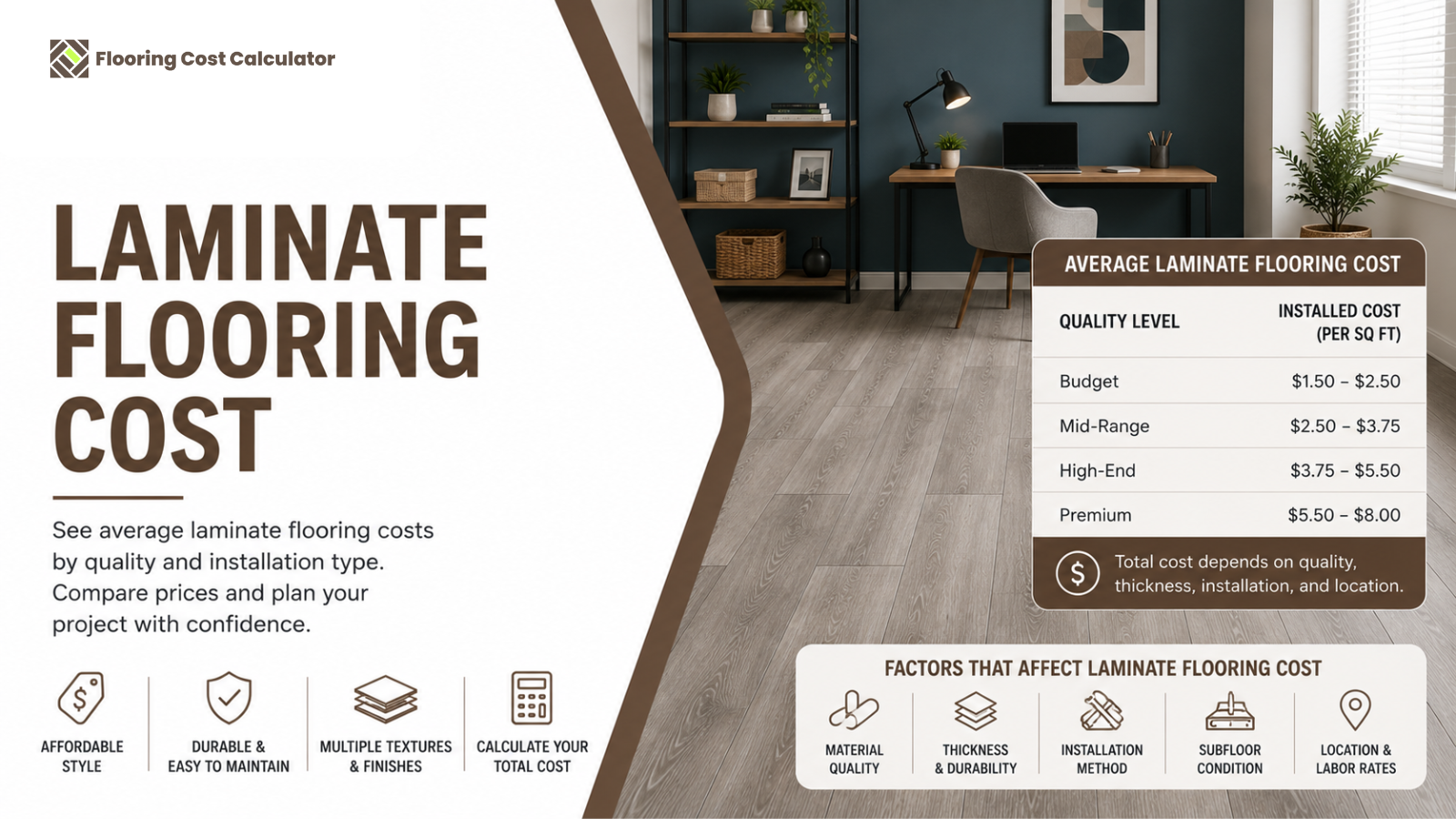
Laminate: approximately $4–$13 per square foot installed
LVP: approximately $5–$18 per square foot installed
LVP generally costs more than laminate in the pricing data.
However, many homeowners choose LVP because of its moisture resistance.
Laminate may provide a lower-cost option for homeowners who prioritize wood-look designs and affordability.
The better choice depends on the room and your priorities.
LVP vs. Hardwood Cost
Hardwood generally requires a larger investment than luxury vinyl plank.
Based on the state-level pricing:
LVP: approximately $5–$18 per square foot
Hardwood: approximately $8–$28 per square foot
LVP can reproduce the appearance of wood at a lower initial cost.
It also provides excellent moisture resistance and easy maintenance.
Hardwood, however, offers authentic natural material and may provide refinishing potential.
Both options can be appropriate depending on the homeowner's goals.
Is Luxury Vinyl Plank Worth the Cost?
LVP can offer excellent value for homeowners seeking a combination of:
- Attractive wood-look designs
- Moisture resistance
- Durability
- Easy maintenance
- Moderate installation costs
It can be particularly appealing for busy households and areas where natural hardwood may not be the most practical option.
However, product quality matters.
Choosing an appropriate LVP product for the room and ensuring proper installation are essential for long-term performance.
How Long Does LVP Flooring Last?
The lifespan of luxury vinyl plank depends on several factors, including:
- Product quality
- Wear layer
- Installation quality
- Foot traffic
- Maintenance
- Environmental conditions
A higher-quality product that is properly installed and maintained may provide many years of service.
However, no single lifespan estimate applies to every LVP product.
Manufacturer warranties and product specifications can provide useful information when comparing flooring options.
LVP Flooring Maintenance Costs
One advantage of LVP is relatively simple routine maintenance.
Typical care may include:
- Sweeping
- Vacuuming
- Damp cleaning with appropriate products
- Cleaning spills promptly
Furniture pads can help reduce the risk of scratches or dents.
Always follow manufacturer cleaning recommendations.
Using inappropriate cleaning products may damage the floor's finish or leave residue.
How to Save Money on LVP Flooring
Several strategies may help control the cost of an LVP installation.
Consider:
- Comparing multiple contractor estimates
- Choosing a product appropriate for your needs
- Selecting a straightforward installation pattern
- Clearing rooms before installation
- Moving small furniture yourself
- Completing multiple rooms during one project
- Purchasing flooring during promotions
However, do not reduce costs by skipping necessary:
- Subfloor repairs
- Floor leveling
- Moisture treatment
- Manufacturer-required installation materials
Proper preparation can help protect your flooring investment.
Questions to Ask an LVP Flooring Contractor
Before hiring an installer, ask:
- Is this LVP appropriate for my room?
- Will the floor be floating or glued down?
- Is existing flooring removal included?
- Is disposal included?
- Does the subfloor require preparation?
- Is floor leveling included?
- Is underlayment required?
- Are moisture tests necessary?
- How much extra flooring should I purchase?
- Are trim and transitions included?
- Are stairs priced separately?
- Is furniture moving included?
- What warranty is provided?
Clear communication can help prevent unexpected costs during installation.
Frequently Asked Questions
How much does luxury vinyl plank flooring cost per square foot?
Based on the 2026 state-level pricing used by the Flooring Cost Calculator, estimated installed LVP costs range from approximately $5–$18 per square foot.
Actual costs depend on location, flooring quality, installation method, and project conditions.
How much does it cost to install 500 square feet of LVP?
Using the broad state-level range of $5–$18 per square foot, a 500-square-foot project could range from approximately $2,500 to $9,000.
Your state's specific range will provide a more useful estimate.
How much does it cost to install 1,000 square feet of LVP?
Using the broad $5–$18 range, approximately $5,000–$18,000.
The actual cost depends heavily on your location and project requirements.
What affects LVP flooring cost?
Major factors include product quality, wear layer, core construction, installation method, geographic location, subfloor condition, and project complexity.
Is LVP cheaper than hardwood?
Generally, yes.
Based on the state-level pricing used by the Flooring Cost Calculator, LVP ranges from approximately $5–$18 per square foot, while hardwood ranges from approximately $8–$28 per square foot.
Is LVP more expensive than laminate?
Based on the pricing data used by the Flooring Cost Calculator, LVP generally has higher estimated installed costs than laminate.
Does LVP require underlayment?
Some products do, while others have attached backing.
Always follow manufacturer requirements.
Is LVP waterproof?
Many LVP products are marketed as waterproof or highly water-resistant, but installation conditions and manufacturer specifications still matter. Moisture beneath the flooring should not be ignored.
Can LVP be installed over existing flooring?
In some cases, yes, provided the existing surface meets the manufacturer's installation requirements.
The floor generally needs to be stable, clean, appropriately level, and compatible with the selected product.
Does LVP installation include old flooring removal?
Not necessarily.
Ask your contractor whether demolition, hauling, and disposal are included.
Final Verdict
Luxury vinyl plank has become a popular flooring option because it provides an appealing combination of wood-look design, moisture resistance, durability, and relatively easy maintenance.
Based on the 2026 state-level pricing used by the Flooring Cost Calculator, estimated installed LVP flooring costs range from approximately $5 to $18 per square foot.
Location can significantly influence pricing. Arkansas and Mississippi are at the lower end of the state-level data at approximately $5–$9 per square foot, while Hawaii reaches approximately $11–$18 per square foot.
The final cost of your LVP project will depend on more than your state.
Product quality, wear layer, installation method, project size, room complexity, existing flooring removal, and subfloor preparation can all affect the total investment.
For the most accurate budget, consider the complete flooring project rather than focusing exclusively on the retail price of the LVP product.
Final Thoughts
Luxury vinyl plank can be an excellent choice for homeowners who want the visual appeal of wood flooring combined with practical performance and a lower initial investment than many hardwood options.
Before selecting a product, consider where the flooring will be installed, the amount of daily traffic it will receive, moisture exposure, maintenance requirements, and the quality of the specific LVP product.
Next, measure your flooring area carefully and use pricing appropriate for your state to create a preliminary budget.
Remember to account for potential additional expenses such as existing flooring removal, disposal, subfloor preparation, floor leveling, underlayment, trim, transitions, and stairs.
When comparing contractors, request itemized estimates that clearly explain what is included. Comparing the complete scope of work can help you identify the best overall value rather than simply selecting the lowest advertised installation rate.
Before requesting contractor estimates, use the Flooring Cost Calculator on the homepage to estimate your luxury vinyl plank flooring cost based on your room size and state. A personalized estimate can help you establish a realistic 2026 budget, understand local LVP installation prices, and compare contractor quotes with greater confidence.