 Flooring Cost Calculator
Introduction
Choosing between hardwood and tile flooring can be a difficult decision because both materials offer exceptional durability, attractive design options, and the potential to provide decades of service when properly installed and maintained.
However, hardwood and tile create very different living environments.
Hardwood is valued for its natural warmth, timeless appearance, and ability to make living spaces feel comfortable and inviting. Tile, on the other hand, is known for outstanding moisture resistance, durability, and easy routine maintenance, making it particularly suitable for kitchens, bathrooms, entryways, and other demanding areas.
The right choice depends on much more than appearance. Your budget, local climate, room location, household lifestyle, maintenance preferences, comfort expectations, and long-term plans should all influence your decision.
In many homes, the best solution is not necessarily choosing one material for the entire property. Homeowners often use hardwood in living rooms, dining rooms, bedrooms, and hallways while choosing tile for bathrooms, kitchens, laundry rooms, and entryways.
This guide compares hardwood and tile flooring in detail, including installation costs, durability, maintenance, moisture resistance, comfort, lifespan, repairability, and long-term value, to help you decide which flooring material is the better fit for your home.
Quick Answer
For most homeowners:
- Hardwood flooring is best for natural beauty, warmth, comfort, and timeless interior design.
- Tile flooring is best for moisture resistance, durability, and demanding high-traffic areas.
- Hardwood is generally more comfortable and warmer underfoot.
- Tile generally performs better in bathrooms and other moisture-prone rooms.
- Hardwood can often be sanded and refinished to restore its appearance.
- Tile requires relatively little routine maintenance but individual tiles may crack or grout may require attention over time.
The best choice depends primarily on where the flooring will be installed and how the room is used.
Understanding Hardwood Flooring
Hardwood flooring is made from natural wood and has been used in homes for generations.
Popular wood species include:
- Oak
- Maple
- Hickory
- Walnut
- Cherry
Hardwood is available in different:
- Plank widths
- Colors
- Wood species
- Grades
- Textures
- Finishes
One of hardwood's greatest advantages is its natural variation.
Each board has its own grain and character, creating a floor with a distinctive appearance that manufactured materials attempt to reproduce but cannot completely duplicate.
Hardwood is commonly installed in:
- Living rooms
- Dining rooms
- Bedrooms
- Hallways
- Home offices
It is particularly popular in areas where appearance and comfort are priorities.
Understanding Tile Flooring
Tile flooring is available in several materials, although ceramic and porcelain are among the most common choices for residential interiors.
Tile offers an enormous variety of:
- Colors
- Shapes
- Sizes
- Patterns
- Textures
- Finishes
Modern manufacturing techniques also allow tile to imitate materials such as:
- Wood
- Natural stone
- Concrete
- Marble
Tile is commonly installed in:
- Bathrooms
- Kitchens
- Entryways
- Laundry rooms
- Mudrooms
It is especially popular in areas where moisture resistance and durability are important.
Hardwood vs. Tile: Appearance
Both hardwood and tile can create beautiful interiors, but their visual characteristics are very different.
Hardwood
Hardwood provides a natural, warm appearance.
Its grain patterns and subtle variations can make a room feel:
- Comfortable
- Traditional
- Elegant
- Inviting
- Timeless
Depending on the wood species and finish, hardwood can complement architectural styles ranging from traditional to contemporary.
Tile
Tile provides significantly greater design variety.
Homeowners can choose from thousands of combinations involving:
- Color
- Size
- Shape
- Pattern
- Texture
Large-format porcelain tile can create a modern, minimalist appearance, while decorative ceramic tile can become a major design feature.
Wood-look tile can also provide some of the visual characteristics of hardwood while offering tile's moisture resistance.
Which Is Better?
For authentic natural warmth, hardwood generally has the advantage.
For maximum design flexibility, tile offers more possibilities.
Hardwood vs. Tile: Installation Cost
The cost of installing either flooring type depends on several factors.
These include:
- Material quality
- Room size
- Local labor rates
- Existing flooring removal
- Subfloor condition
- Installation pattern
- Site accessibility
Hardwood installation costs can increase when projects require:
- Extensive subfloor preparation
- Complex room layouts
- Stairs
- Custom patterns
- Premium wood species
Tile installation costs can increase because of:
- Floor preparation
- Tile layout
- Cutting
- Grout installation
- Waterproofing requirements
- Decorative patterns
- Large-format tiles
Although material prices are important, homeowners should compare the total installed cost rather than simply looking at the price of the flooring itself.
Hardwood vs. Tile: Installation Complexity
Both materials benefit from professional installation, but the installation processes are different.
Hardwood Installation
Hardwood may be:
- Nailed
- Stapled
- Glued
The correct installation method depends on the product and subfloor.
Proper installation may require:
- Subfloor inspection
- Moisture testing
- Floor leveling
- Material acclimation when required
- Expansion allowances
Wood naturally responds to changes in environmental conditions, so proper installation is important for long-term performance.
Tile Installation
Tile installation typically involves:
- Preparing the substrate
- Establishing the layout
- Applying the appropriate setting material
- Cutting tiles
- Installing tiles
- Allowing materials to set
- Applying grout
- Finishing and cleaning
The substrate must be properly prepared because movement or instability beneath the tile can contribute to cracking.
Which Is Easier?
Neither material should automatically be considered simple to install.
Straightforward hardwood installations may progress relatively quickly, while detailed tile projects can be labor-intensive.
The specific project determines installation complexity.
Hardwood vs. Tile: Durability
Both hardwood and tile can be highly durable.
However, they respond differently to everyday wear.
Hardwood Durability
Hardwood can provide decades of service when properly maintained.
However, it may develop:
- Scratches
- Dents
- Surface wear
The level of durability varies depending on:
- Wood species
- Finish quality
- Household traffic
- Maintenance
One major advantage is that many hardwood floors can be refinished.
Sanding and refinishing can remove years of surface wear and restore the floor's appearance.
Tile Durability
High-quality ceramic and porcelain tiles are extremely durable.
They can withstand:
- Heavy foot traffic
- Frequent cleaning
- Everyday household use
However, tiles can occasionally crack or chip, particularly if a heavy object is dropped or if there is movement beneath the flooring.
Which Is More Durable?
For resistance to everyday surface wear, tile often has the advantage.
For long-term restoration potential, hardwood offers the major benefit of refinishing.
Hardwood vs. Tile: Lifespan
Both materials can have long lifespans.
A properly maintained hardwood floor can potentially remain in a home for many decades.
Its lifespan can be extended through:
- Routine maintenance
- Professional refinishing
- Timely repairs
High-quality tile can also last for decades.
Tile itself may remain structurally sound for a very long time, although grout, sealants, or individual damaged tiles may require maintenance.
The actual lifespan of either flooring depends heavily on installation quality, material quality, household use, and maintenance.
Hardwood vs. Tile: Moisture Resistance
Moisture performance is one of the biggest differences between hardwood and tile.
Hardwood
Wood is sensitive to moisture.
Excessive water exposure can potentially cause:
- Swelling
- Warping
- Cupping
- Staining
- Structural damage
Spills should generally be cleaned promptly.
For this reason, solid hardwood is not usually the preferred flooring for areas with frequent water exposure.
Tile
Ceramic and porcelain tile generally perform very well in moisture-prone environments when installed as part of an appropriate flooring system.
This makes tile particularly popular in:
- Bathrooms
- Kitchens
- Laundry rooms
- Entryways
However, tile alone does not automatically make an entire floor assembly waterproof.
Proper substrate preparation, waterproofing where required, and professional installation remain important.
Winner for Moisture Resistance
Tile
For areas exposed to frequent water or moisture, tile generally provides the stronger option.
Hardwood vs. Tile: Comfort
Comfort is another major difference.
Hardwood
Hardwood generally feels warmer and more comfortable underfoot than tile.
The natural material creates a softer visual and physical environment.
It is particularly attractive for:
- Bedrooms
- Living rooms
- Dining rooms
Tile
Tile is a hard surface.
It may feel less comfortable when standing for long periods and can feel cold in cooler climates.
Area rugs can improve comfort in certain rooms.
Some homeowners also install radiant floor heating beneath compatible tile systems.
Winner for Comfort
Hardwood
For everyday warmth and comfort, hardwood generally has the advantage.
Hardwood vs. Tile: Performance in Hot Climates
In warm climates, tile can be particularly appealing because it often feels cooler underfoot.
This can make indoor spaces feel more comfortable during hot weather.
Hardwood can also perform well in warm climates when indoor temperature and humidity are properly managed.
However, significant changes in humidity can cause natural wood to expand or contract.
For homes in hot regions, the best choice may depend on:
- Indoor climate control
- Humidity
- Room location
- Personal comfort preferences
Hardwood vs. Tile: Performance in Cold Climates
In colder climates, hardwood often feels warmer and more inviting.
Tile can feel cold underfoot during winter unless the home uses:
- Radiant floor heating
- Area rugs
- Other heating solutions
Both materials can perform successfully in cold regions when properly installed.
Indoor environmental conditions remain particularly important for hardwood.
Hardwood vs. Tile: Maintenance
Neither hardwood nor tile is excessively difficult to maintain, but each has different requirements.
Hardwood Maintenance
Routine care may include:
- Sweeping
- Vacuuming with an appropriate attachment
- Cleaning with approved products
- Wiping spills promptly
- Using furniture pads
Over time, hardwood may require:
- Finish renewal
- Professional refinishing
- Individual board repairs
Tile Maintenance
Routine tile care generally includes:
- Sweeping
- Vacuuming
- Mopping
- Cleaning spills
Grout lines may require additional cleaning.
Depending on the tile and grout system, sealing may also be recommended.
Which Is Easier to Maintain?
Tile generally has an advantage for routine maintenance, particularly in areas exposed to moisture.
However, both materials can be relatively manageable with consistent care.
Hardwood vs. Tile: Repairability
Accidents happen, and eventually almost every floor may require some type of repair.
Hardwood Repairs
Hardwood can sometimes be repaired by:
- Replacing individual boards
- Repairing minor surface damage
- Sanding
- Refinishing
One of hardwood's greatest advantages is the ability to restore an entire worn surface through refinishing.
However, replacing individual boards can require professional skill.
Tile Repairs
Damaged tiles can often be replaced individually.
The process may involve:
- Removing grout
- Carefully removing the damaged tile
- Preparing the surface
- Installing a replacement
- Regrouting
The biggest challenge may be finding an exact replacement tile years later.
Keeping extra tiles after the original installation is therefore a good idea.
Which Is Easier to Repair?
Both materials offer repair options.
Tile allows localized replacement, while hardwood offers exceptional restoration potential through refinishing.
Hardwood vs. Tile for Pets
Pets can affect flooring through:
- Scratches
- Dirt
- Water spills
- Accidents
- Heavy traffic
Tile generally provides excellent resistance to scratches and is easy to clean.
Hardwood may develop scratches from pet claws, particularly with larger or highly active dogs.
However, some homeowners appreciate the natural patina hardwood develops over time.
If pets are a major consideration, tile may be the more practical choice for durability and cleaning.
Hardwood vs. Tile for Families With Children
Families with children need flooring that can handle:
- Spills
- Toys
- Dropped objects
- Heavy activity
- Frequent cleaning
Tile provides excellent durability and easy cleaning.
However, its hard surface may be less comfortable for young children who frequently play on the floor.
Hardwood provides a warmer surface but may be more vulnerable to scratches and dents.
The best choice depends on whether durability or comfort is the higher priority.
Hardwood vs. Tile in the Kitchen
Both materials are used in kitchens.
Hardwood Kitchens
Hardwood can create a warm, continuous appearance when the kitchen connects to a living or dining area.
However, spills and plumbing leaks should be addressed quickly.
Tile Kitchens
Tile offers excellent durability and moisture resistance.
It is also relatively easy to clean.
However, homeowners who spend long periods standing in the kitchen may find tile harder underfoot.
Best Choice
For maximum moisture resistance, tile generally has the advantage.
For visual continuity and warmth, hardwood may be preferred in open-plan homes.
Hardwood vs. Tile in the Bathroom
Tile is generally the stronger choice for bathrooms.
Bathrooms experience:
- Water
- Humidity
- Spills
- Frequent cleaning
Ceramic and porcelain tiles are widely used in these environments.
Solid hardwood is generally less suitable for rooms with frequent water exposure.
Winner for Bathrooms
Tile
Hardwood vs. Tile in the Living Room
Living rooms are one of hardwood's strongest applications.
Hardwood provides:
- Natural beauty
- Warmth
- Comfort
- Timeless appearance
Tile can also work well, particularly in:
- Warm climates
- Modern homes
- Open-concept designs
However, many homeowners prefer the warmer feel of hardwood in primary living spaces.
Winner for Living Rooms
For most homeowners seeking warmth and traditional residential appeal, hardwood.
Hardwood vs. Tile in Bedrooms
Hardwood is generally more popular than tile for bedrooms.
Its warmer surface and natural appearance create a comfortable atmosphere.
Tile may be appropriate in warmer climates, particularly where cool flooring is desirable.
Area rugs can improve comfort with either material.
Winner for Bedrooms
Hardwood for most homes.
Hardwood vs. Tile in Entryways
Entryways experience:
- Dirt
- Moisture
- Outdoor debris
- Heavy traffic
Tile performs exceptionally well in these conditions.
Hardwood can be used successfully but may require greater attention to moisture and surface wear.
Winner for Entryways
Tile for maximum practicality.
Hardwood vs. Tile for Home Value
Both hardwood and high-quality tile can contribute positively to a home's appearance and buyer appeal.
Hardwood is often valued for:
- Timeless appearance
- Natural materials
- Long lifespan
- Refinishing potential
Tile can add value when appropriately installed in:
- Kitchens
- Bathrooms
- Entryways
- High-traffic areas
The greatest value generally comes from choosing flooring appropriate for the home's architecture, location, and room function.
Installing expensive flooring in an inappropriate location does not necessarily produce a better return.
Which Flooring Is Better for a Whole House?
For many homes, using both materials provides the best solution.
A common flooring plan might use hardwood in:
- Living rooms
- Dining rooms
- Bedrooms
- Hallways
Tile might be installed in:
- Bathrooms
- Laundry rooms
- Entryways
The kitchen could use either material depending on homeowner preference.
This approach allows each flooring type to be used where its strengths are most valuable.
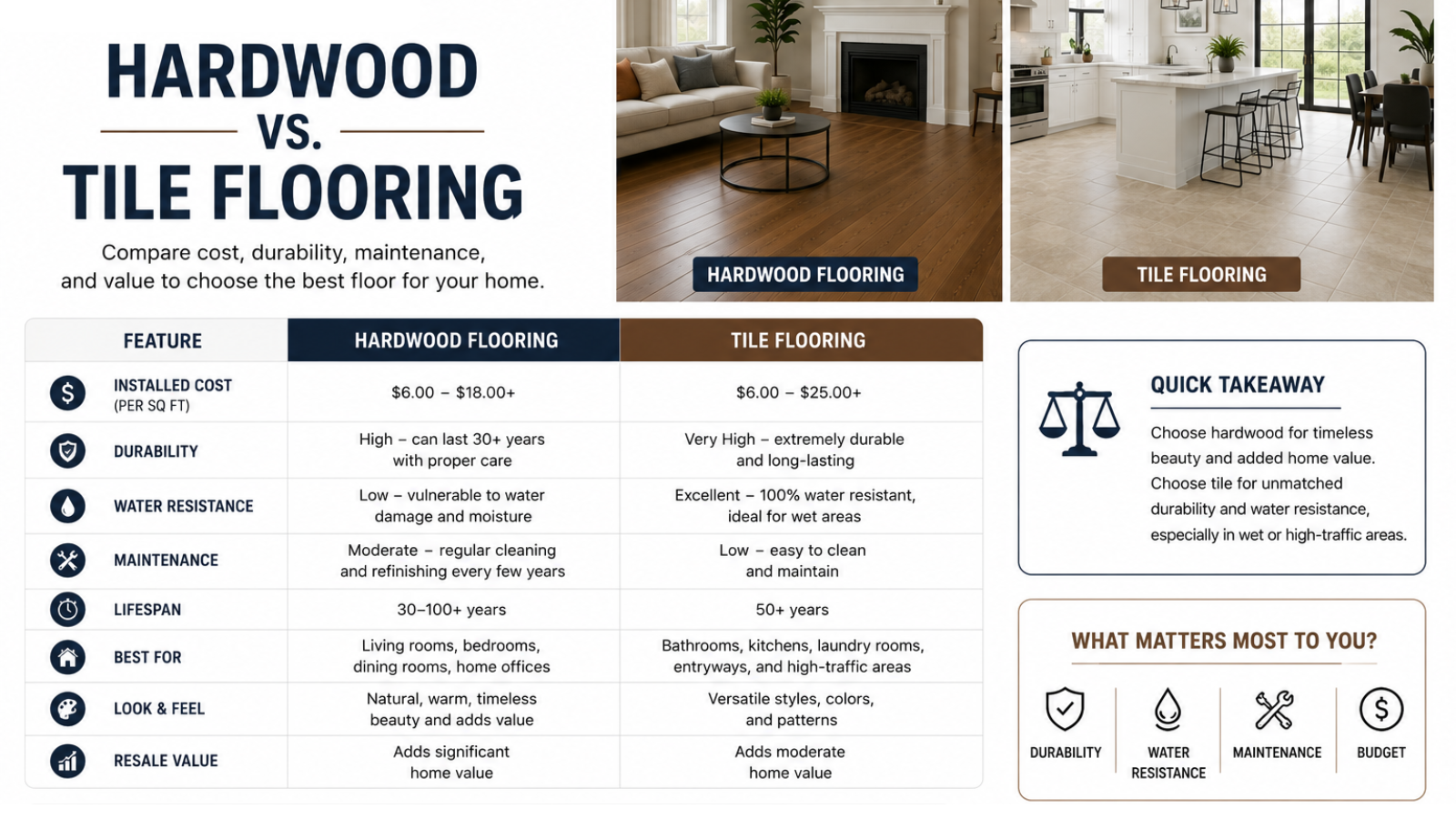
Hardwood vs. Tile Comparison at a Glance
| Feature | Hardwood Flooring | Tile Flooring |
|---|---|---|
| Appearance | Natural and timeless | Extremely versatile |
| Moisture Resistance | Limited | Excellent |
| Durability | Excellent | Excellent to Outstanding |
| Comfort | Very Good | Firm |
| Warmth Underfoot | Warmer | Cooler |
| Routine Maintenance | Low to Moderate | Low |
| Refinishing | Often possible | Not applicable |
| Localized Repairs | Possible | Usually possible |
| Pet Resistance | Moderate to Good | Excellent |
| Best for Bathrooms | Generally No | Excellent |
| Best for Bedrooms | Excellent | Climate-dependent |
| Best for Living Rooms | Excellent | Very Good |
| Best for Entryways | Good | Excellent |
| Design Variety | Excellent | Outstanding |
| Long-Term Value | Excellent | Excellent |
Both materials can provide decades of service when properly installed and maintained.
Common Mistakes When Choosing Between Hardwood and Tile
Homeowners sometimes focus too heavily on appearance while overlooking practical considerations.
Common mistakes include:
- Installing moisture-sensitive flooring in wet areas.
- Choosing tile without considering comfort.
- Ignoring local climate conditions.
- Forgetting subfloor preparation costs.
- Comparing material prices without installation costs.
- Choosing flooring based only on current trends.
- Failing to consider pets.
- Ignoring maintenance requirements.
- Using one flooring material throughout the home without considering room function.
- Not purchasing extra material for future repairs.
Careful planning can help prevent expensive flooring changes later.
Questions to Ask Before Choosing
Before deciding between hardwood and tile, ask yourself:
- Which room am I renovating?
- Is moisture a concern?
- How much foot traffic does the room receive?
- Do I have pets?
- Do I have young children?
- Do I prefer warm or cool flooring?
- How important is comfort underfoot?
- How much maintenance am I comfortable performing?
- Do I want the ability to refinish the floor?
- How long do I plan to remain in the home?
- What is my total installed budget?
Your answers can make the decision much easier.
Frequently Asked Questions
Is hardwood or tile flooring better?
Neither is universally better.
Hardwood is generally better for homeowners who prioritize natural beauty, warmth, comfort, and refinishing potential.
Tile is generally better for moisture resistance, durability, and demanding areas such as bathrooms and entryways.
Is hardwood more expensive than tile?
It depends on the specific products and installation requirements.
Premium hardwood can be expensive, but high-end porcelain or decorative tile installations can also represent a significant investment.
Always compare total installed costs.
Which lasts longer, hardwood or tile?
Both can last for decades.
Hardwood has the advantage of potentially being refinished multiple times, while high-quality tile can remain durable for many years with relatively little surface wear.
Which is better for pets?
Tile generally offers better scratch resistance and easier cleaning.
Hardwood can work in homes with pets but may show scratches and wear over time.
Which is better for kitchens?
Both can work.
Tile provides stronger moisture resistance, while hardwood offers greater warmth and visual continuity with adjacent living spaces.
Which is better for bathrooms?
Tile is generally the better option because of its moisture resistance.
Which is easier to clean?
Both are relatively easy to clean.
Tile generally tolerates moisture better, while hardwood requires cleaning methods and products appropriate for wood.
Can hardwood be used throughout the entire house?
Hardwood can be used in many living areas but is generally not recommended for rooms with frequent water exposure.
Many homeowners combine hardwood with tile in bathrooms and other moisture-prone spaces.
Does hardwood add more home value than tile?
Both can contribute to buyer appeal.
Hardwood is often highly desirable in living areas, while quality tile is valued in bathrooms, kitchens, and entryways.
The best value comes from using the right material in the right location.
Final Verdict
Hardwood and tile are both excellent flooring materials, but they serve different priorities.
Hardwood flooring is an outstanding choice for homeowners who value natural beauty, warmth, comfort, and timeless design. Its ability to be refinished can extend its lifespan and allow a worn floor to be restored rather than completely replaced.
It is particularly well suited for living rooms, dining rooms, bedrooms, and other relatively dry interior spaces.
Tile flooring is an excellent choice for homeowners who prioritize durability, moisture resistance, and straightforward maintenance. Ceramic and porcelain tile perform particularly well in bathrooms, kitchens, entryways, laundry rooms, and other demanding areas.
For many homeowners, the best solution is to use both.
Hardwood can provide warmth and character throughout primary living spaces, while tile provides additional protection in areas exposed to water, dirt, and heavy use.
Ultimately, the right choice depends on your home's layout, your lifestyle, your budget, and the specific requirements of each room.
Final Thoughts
Choosing between hardwood and tile flooring is not simply a question of which material looks better. Both can create beautiful, long-lasting floors when used in appropriate areas and installed correctly.
Consider how each room functions before making your decision. Think about moisture exposure, foot traffic, pets, children, comfort, maintenance, and your local climate. Then compare the complete cost of each option, including materials, installation, existing flooring removal, subfloor preparation, and other potential expenses.
If you love the warmth and natural character of hardwood but also need the durability and moisture resistance of tile, you do not necessarily have to choose one for the entire home. Combining the two materials strategically can provide an excellent balance of appearance and practical performance.
Before requesting contractor estimates, use the Flooring Cost Calculator on the homepage to estimate your project's cost based on your room size, selected flooring material, and state. A personalized estimate can help you compare hardwood and tile installation costs, establish a realistic budget, and choose the flooring option that provides the best combination of appearance, durability, functionality, and long-term value for your home.