 Flooring Cost Calculator
Introduction
Carpet remains one of the most popular flooring choices for homeowners who want a soft, warm, and comfortable surface underfoot. It is particularly common in bedrooms, family rooms, living rooms, basements, and other areas where comfort and noise reduction are important.
Compared with many hard-surface flooring materials, carpet can also be relatively affordable to install. However, the total cost of a new carpet installation can vary significantly depending on the carpet material, quality, padding, room size, labor costs, existing flooring removal, subfloor condition, and local market.
A basic carpet installation in a straightforward rectangular bedroom may be relatively inexpensive, while installing premium wool carpet throughout several rooms can represent a much larger investment.
Homeowners should also consider costs beyond the carpet itself. Padding, removal and disposal of existing flooring, furniture moving, stairs, floor preparation, transitions, and additional material for waste can all affect the final project price.
Understanding these expenses before requesting contractor estimates can help you establish a realistic budget and compare flooring options more effectively.
This guide explains carpet flooring costs, the factors that influence installation prices, the different types of carpet available, and the additional expenses homeowners should consider when planning a carpet replacement project.
Quick Answer
The total cost of installing carpet depends on several factors, including:
- Carpet material
- Carpet quality
- Room size
- Carpet padding
- Labor rates
- Existing flooring removal
- Subfloor preparation
- Furniture moving
- Room layout
- Stairs
- Installation complexity
- Geographic location
The carpet itself represents only one part of the total project cost.
A complete carpet installation budget should generally account for:
- Carpet
- Padding
- Installation labor
- Old flooring removal
- Disposal
- Floor preparation
- Transitions
- Stairs, if applicable
- Additional material for cuts and waste
For the most accurate estimate, calculate the total floor area first and then obtain quotes that clearly identify what is included in the installation price.
How Much Does Carpet Flooring Cost?
Carpet flooring costs can vary considerably.
Budget-friendly synthetic carpets are available for homeowners looking to control project expenses, while premium carpet materials and high-end constructions can cost significantly more.
The total installed price is influenced by two primary categories:
Material costs and installation-related costs.
Material costs may include:
- Carpet
- Padding
- Transition materials
- Additional carpet for waste
Installation-related expenses may include:
- Labor
- Existing flooring removal
- Disposal
- Furniture moving
- Subfloor preparation
- Stair installation
Because these costs vary from one project to another, two homes with the same square footage can have very different final carpet installation prices.
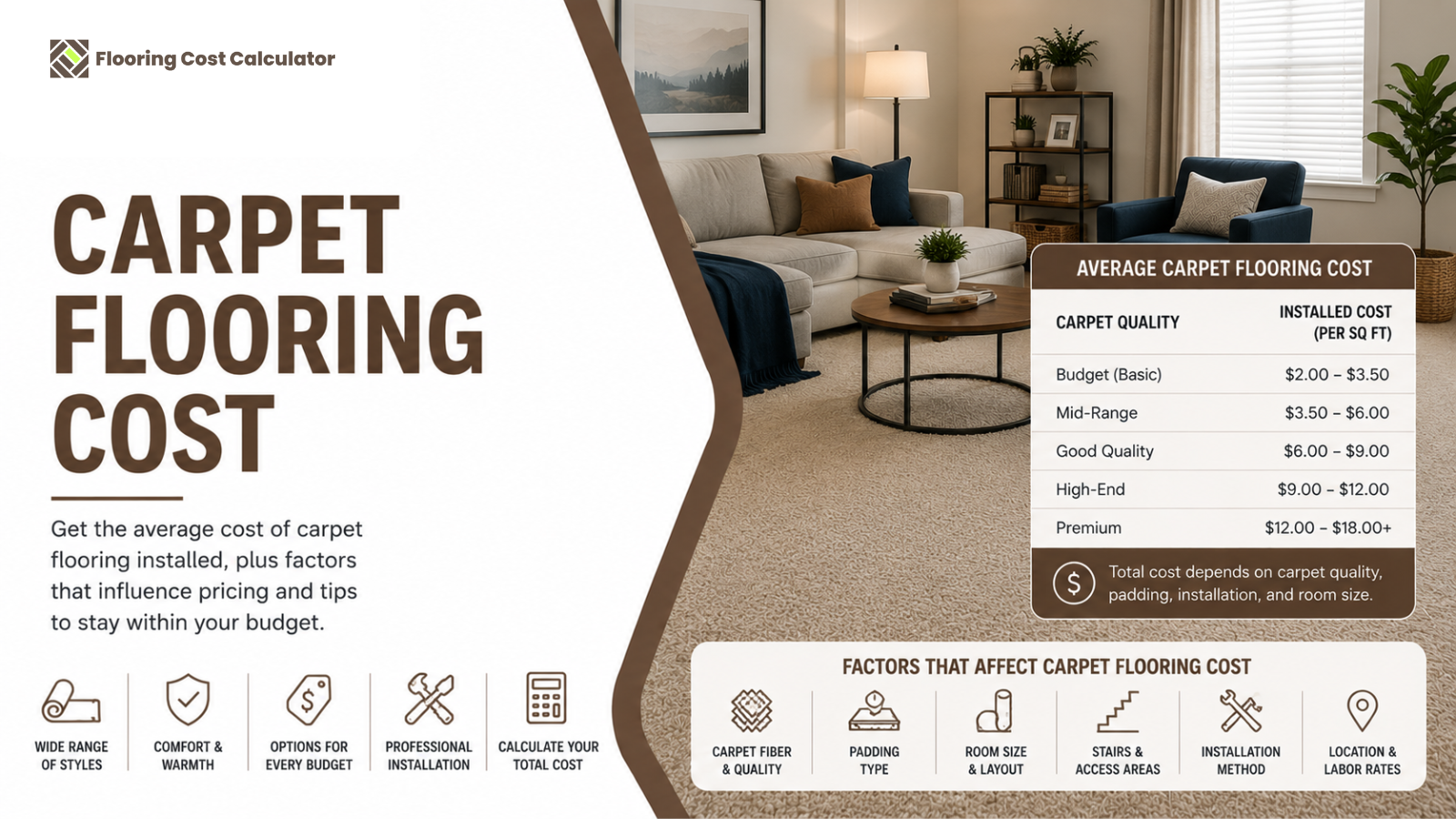
Carpet Cost Per Square Foot
Carpet is commonly priced by the square foot, although some retailers may still display prices by the square yard.
One square yard equals nine square feet.
When comparing prices, make sure all estimates use the same measurement unit.
The cost per square foot depends heavily on the carpet's:
- Fiber
- Construction
- Density
- Pile
- Brand
- Quality
- Durability
Entry-level carpet may provide an affordable solution for low-traffic rooms or short-term renovation projects.
Mid-range carpet generally offers a stronger balance between:
- Appearance
- Comfort
- Durability
- Cost
Premium carpet may feature higher-quality fibers, denser construction, specialized stain protection, or luxury materials.
However, material price alone does not determine the final installed cost.
Carpet Material Costs
The type of fiber used to manufacture carpet can significantly influence both price and performance.
Common carpet materials include:
- Polyester
- Nylon
- Triexta
- Olefin
- Wool
Each material offers different advantages.
Polyester Carpet
Polyester is a popular synthetic carpet fiber.
It is often selected because of its:
- Soft texture
- Wide color selection
- Stain resistance
- Accessible price
Polyester carpet can work particularly well in:
- Bedrooms
- Guest rooms
- Lower-traffic living spaces
Performance varies by product quality.
Higher-quality polyester carpets may provide better long-term durability than entry-level options.
For homeowners focused on affordability and softness, polyester can be an attractive choice.
Nylon Carpet
Nylon is widely used in residential carpeting and is known for its durability.
Advantages may include:
- Strong wear resistance
- Good resilience
- Suitability for high-traffic areas
- Wide design selection
Nylon can be particularly appropriate for:
- Hallways
- Stairs
- Family rooms
- Busy households
It may cost more than some entry-level synthetic carpet options, but its durability can make it a worthwhile investment in heavily used areas.
For homeowners who expect significant foot traffic, comparing nylon products may be worthwhile.
Triexta Carpet
Triexta is another synthetic carpet fiber available for residential applications.
Depending on the product, it may offer:
- Softness
- Stain resistance
- Durability
- Easy maintenance
Triexta is commonly considered by families looking for a carpet that can handle everyday household activity.
Pricing varies by brand and quality.
As with any carpet material, homeowners should compare individual product warranties and performance specifications rather than choosing based solely on fiber type.
Olefin Carpet
Olefin, also known as polypropylene, is another synthetic carpet fiber.
It may be used in certain residential and commercial applications.
Advantages can include:
- Moisture resistance
- Stain resistance
- Affordable pricing
However, performance characteristics differ from nylon and other carpet fibers.
Olefin may be more suitable for certain lower-traffic applications or specific carpet styles.
When comparing olefin carpet, consider where it will be installed and how much daily wear the area receives.
Wool Carpet
Wool is generally considered a premium natural carpet material.
It is valued for:
- Natural softness
- Luxury appearance
- Resilience
- Long-term performance
- Natural fiber construction
Wool carpet typically costs considerably more than common synthetic options.
It may be selected for:
- Premium bedrooms
- Formal living rooms
- Luxury homes
Wool can provide exceptional appearance and comfort, but homeowners should also consider its maintenance requirements and higher initial investment.
Carpet Quality Affects Cost
Two carpets made from the same fiber can have very different prices.
Several construction characteristics influence carpet quality.
These may include:
- Density
- Face weight
- Twist
- Pile height
- Backing
- Fiber quality
Higher-quality construction may improve:
- Durability
- Appearance retention
- Comfort
- Long-term performance
However, the most expensive carpet is not necessarily required for every room.
A low-traffic guest bedroom may not need the same carpet quality as a busy hallway or family room.
Matching carpet quality to the room's expected use can help control costs without sacrificing practical performance.
Carpet Padding Cost
Padding is an important part of most carpet installations.
It sits beneath the carpet and can influence:
- Comfort
- Noise reduction
- Carpet performance
- Floor feel
Padding is available in different:
- Materials
- Densities
- Thicknesses
- Price ranges
Choosing the least expensive padding may reduce the initial project cost, but the padding should still meet the carpet manufacturer's requirements.
Using inappropriate padding can potentially affect carpet performance and may influence warranty coverage.
When requesting estimates, ask whether padding is included in the quoted price.
Why Carpet Padding Matters
Homeowners sometimes focus entirely on the visible carpet while overlooking the material underneath.
Quality padding can help:
- Improve comfort underfoot
- Absorb impact
- Reduce noise
- Support the carpet
- Improve overall floor performance
However, thicker padding is not automatically better.
Some carpet products require specific padding thickness and density.
Always follow manufacturer recommendations.
For areas such as stairs or high-traffic hallways, installers may recommend padding appropriate for heavier use.
Labor Cost for Carpet Installation
Professional installation is another important part of the total project budget.
Labor costs vary depending on:
- Geographic location
- Contractor
- Project size
- Room shape
- Carpet type
- Installation complexity
A simple rectangular room is generally easier to carpet than a home with:
- Multiple small rooms
- Narrow hallways
- Closets
- Angled walls
- Stairs
Labor pricing may also vary depending on whether additional services are required.
Always ask what is included in the quoted installation price.
Existing Flooring Removal
Before new carpet can be installed, existing flooring may need to be removed.
This could include:
- Old carpet
- Carpet padding
- Laminate
- Vinyl
- Other flooring materials
Removal costs depend on:
- Flooring type
- Installation method
- Room size
- Disposal requirements
Removing old carpet is generally simpler than removing some glued-down flooring materials.
If you are comfortable performing demolition yourself, removing existing carpet may reduce labor costs.
However, the subfloor still needs to be properly inspected before the new installation.
Disposal Costs
Old flooring must be removed from the property after demolition.
Some installers include disposal in their estimate.
Others charge separately.
Before accepting a quote, ask whether the contractor will:
- Remove old carpet
- Remove old padding
- Haul away materials
- Dispose of construction waste
Clarifying these details prevents unexpected expenses later.
Subfloor Preparation
The floor beneath the carpet must be suitable for installation.
Potential problems include:
- Uneven areas
- Loose subfloor sections
- Moisture damage
- Squeaks
- Rot
- Cracks
Minor preparation may be included in standard installation.
Significant repairs generally cost extra.
If the existing carpet has been installed for many years, the condition of the subfloor may not be fully visible until removal begins.
Including a small contingency in your budget can help cover unexpected repairs.
Furniture Moving
Furniture can affect carpet installation costs.
Before installation, rooms generally need to be cleared.
Depending on the contractor, furniture moving may be:
- Included
- Available for an additional charge
- Required to be completed by the homeowner
Large or heavy items may cost more to move.
Examples include:
- Beds
- Dressers
- Sofas
- Dining tables
- Entertainment centers
Some items may require special handling.
Moving smaller furniture yourself before installers arrive can sometimes reduce project costs and speed up installation.
Carpet Installation on Stairs
Stairs can significantly increase carpet installation complexity.
Unlike a flat room, stairs require:
- Additional cutting
- Detailed fitting
- More labor
The number and shape of stairs can influence cost.
Straight staircases are generally simpler than:
- Curved stairs
- Open-sided stairs
- Custom staircases
If your project includes stairs, request separate pricing so you understand how much this portion contributes to the total estimate.
Room Shape and Layout
Room layout can influence material waste and labor requirements.
A simple rectangular room generally requires fewer cuts.
Complex spaces may include:
- Alcoves
- Closets
- Angled walls
- Columns
- Irregular corners
These features can increase installation time and the amount of carpet required.
When measuring for carpet, calculate the actual room dimensions carefully rather than relying only on the home's listed square footage.
How Much Extra Carpet Should You Buy?
Flooring projects generally require more material than the exact measured floor area.
Extra material may be needed for:
- Cuts
- Seams
- Pattern matching
- Room shape
- Installation layout
Carpet waste requirements can vary significantly depending on:
- Carpet width
- Room dimensions
- Pattern
- Number of rooms
Patterned carpets may require additional material to align the design correctly.
For this reason, carpet ordering is often more complex than simply adding a fixed waste percentage.
A professional installer or retailer can calculate the appropriate quantity based on the exact room layout.
Carpet Seams
Most carpet is manufactured in standard roll widths.
Large rooms may require seams where separate carpet sections meet.
Proper seam placement is important for:
- Appearance
- Durability
- Traffic patterns
An experienced installer will generally plan seams to minimize visibility and reduce unnecessary wear.
Room dimensions can affect how much material is required because the carpet must be positioned to create an efficient layout.
Carpet Cost for Bedrooms
Bedrooms are among the most popular areas for carpet.
Carpet provides:
- Softness
- Warmth
- Noise reduction
- Comfort
Because bedrooms may experience less traffic than hallways or family rooms, homeowners sometimes choose more affordable carpet products for these spaces.
However, primary bedrooms may use higher-quality carpet for additional comfort and luxury.
The total cost depends primarily on:
- Bedroom size
- Carpet quality
- Padding
- Existing flooring removal
- Installation
Carpet Cost for Living Rooms
Living rooms can vary considerably in size.
They may also experience more traffic than bedrooms.
Homeowners often prioritize:
- Durability
- Stain resistance
- Appearance
- Comfort
Larger living rooms may require seams, depending on the carpet width and room dimensions.
Furniture moving may also contribute to installation costs.
Carpet Cost for Family Rooms
Family rooms often experience heavy daily use.
For these areas, durability may be more important than choosing the least expensive material.
Families with children or pets may prioritize carpet with:
- Stain resistance
- Strong wear performance
- Easy cleaning
Investing in a more durable carpet may provide better long-term value in frequently used spaces.
Carpet Cost for Basements
Carpet can make a basement feel:
- Warmer
- Quieter
- More comfortable
However, moisture should be carefully evaluated before installation.
A basement with unresolved moisture problems may not be suitable for traditional carpet.
Before installation, check for:
- Water intrusion
- Concrete moisture
- Leaks
- Drainage problems
- High humidity
Installing new carpet without addressing underlying moisture problems can lead to costly replacement later.
Carpet Cost for Stairs
Stair carpeting requires more labor than flat flooring.
Costs may depend on:
- Number of steps
- Stair width
- Stair shape
- Carpet material
- Installation style
Some homeowners choose carpet for stairs because it can provide:
- Softer footing
- Noise reduction
- Additional comfort
However, stairs are also high-traffic areas, so choosing durable carpet is important.
Carpet vs. Hardwood Cost
Hardwood generally requires a larger initial investment than many carpet products.
Hardwood may also involve higher installation costs.
However, hardwood can potentially last much longer and may be refinished rather than replaced.
Carpet typically offers:
- Lower initial cost
- Softer surface
- Easier replacement
Hardwood generally offers:
- Longer potential lifespan
- Natural materials
- Refinishing potential
The better choice depends on your budget and long-term priorities.
Carpet vs. Luxury Vinyl Plank Cost
Carpet and LVP can both provide relatively accessible flooring options.
Carpet may offer a lower initial cost in some installations.
LVP may cost more depending on product quality but can provide:
- Moisture resistance
- Easy cleaning
- Hard-surface durability
Carpet provides:
- Greater softness
- Warmth
- Noise reduction
The right choice depends on the room and household lifestyle.
Carpet vs. Laminate Cost
Carpet and laminate are both available across broad price ranges.
Carpet requires padding and may require professional stretching and installation.
Laminate commonly requires:
- Underlayment
- Subfloor preparation
- Floating floor installation
Rather than comparing material prices alone, calculate the complete installed cost for both options.
Factors That Affect Carpet Installation Cost
The final price of a carpet project is influenced by several factors.
The most important include:
- Total square footage
- Carpet fiber
- Carpet quality
- Padding
- Labor
- Existing flooring removal
- Disposal
- Subfloor repairs
- Furniture moving
- Stairs
- Room layout
- Carpet pattern
- Geographic location
Understanding these factors makes contractor estimates easier to compare.
How to Save Money on Carpet Installation
Homeowners can potentially reduce costs without automatically choosing the cheapest carpet available.
Consider:
- Comparing multiple contractor estimates
- Moving small furniture yourself
- Removing old carpet if appropriate
- Choosing carpet quality based on room traffic
- Selecting simpler patterns
- Avoiding unnecessary premium upgrades
- Completing several rooms during one project
However, avoid reducing costs in ways that compromise installation quality.
Proper installation and appropriate padding can have a significant impact on carpet performance.
Don't Choose Carpet Based Only on Price
The cheapest carpet may not always provide the lowest long-term cost.
A low-quality carpet installed in a high-traffic area may require replacement sooner.
Consider:
- Expected traffic
- Children
- Pets
- Stain exposure
- Maintenance
- Expected ownership period
For a rarely used guest bedroom, an affordable carpet may be perfectly adequate.
For a busy hallway or family room, investing in greater durability may provide better value.
How to Budget for Carpet Replacement
A complete carpet replacement budget should include more than material.
Consider budgeting for:
- Carpet
- Padding
- Installation
- Removal
- Disposal
- Subfloor preparation
- Furniture moving
- Stairs
- Transitions
- Extra material
It is also wise to maintain a contingency for unexpected conditions discovered after the old flooring is removed.
This can help prevent delays if the subfloor requires repairs.
Carpet Cost Factors at a Glance
| Cost Factor | Potential Impact on Price |
|---|---|
| Carpet Material | Low to High |
| Carpet Quality | Moderate to High |
| Room Size | High |
| Padding | Low to Moderate |
| Labor | Moderate to High |
| Existing Flooring Removal | Low to Moderate |
| Subfloor Repairs | Low to High |
| Furniture Moving | Low to Moderate |
| Stairs | Moderate to High |
| Complex Room Layout | Moderate |
| Pattern Matching | Moderate |
| Geographic Location | Moderate |
The exact impact depends on the individual project and local market conditions.
Common Carpet Installation Mistakes
Several mistakes can increase costs or reduce the lifespan of new carpet.
Common examples include:
- Choosing carpet based only on price.
- Using inappropriate padding.
- Ignoring subfloor problems.
- Installing carpet over moisture-damaged surfaces.
- Underestimating material requirements.
- Failing to account for seams.
- Choosing low-durability carpet for high-traffic areas.
- Hiring inexperienced installers.
- Ignoring manufacturer installation requirements.
- Failing to include removal and disposal in the budget.
Careful planning before installation can help avoid expensive problems later.
Questions to Ask Before Buying Carpet
Before selecting carpet, ask yourself:
- What is my total project budget?
- How much traffic does the room receive?
- Do I have children?
- Do I have pets?
- How important is stain resistance?
- How long do I expect the carpet to last?
- What type of padding is recommended?
- Will existing flooring need to be removed?
- Does the subfloor need repairs?
- Will furniture moving cost extra?
- Are stairs included in the project?
- What does the installation estimate include?
These questions can help you select a carpet that fits both your home and budget.
Frequently Asked Questions
How much does carpet flooring cost?
Carpet flooring costs vary significantly depending on the carpet material, quality, padding, room size, labor rates, and additional installation requirements.
The best way to estimate your project is to calculate the floor area and compare complete installed prices.
Is carpet cheaper than hardwood?
In many cases, carpet has a lower initial installation cost than hardwood.
However, hardwood generally has a longer potential lifespan and may be refinished.
Long-term value depends on how frequently the carpet would need to be replaced.
Does carpet installation include padding?
Sometimes.
Some installation packages include standard padding, while others price it separately.
Always ask what is included in the estimate.
Does carpet installation include removing old carpet?
Not always.
Removal and disposal may be included or charged separately.
Request an itemized estimate before hiring an installer.
Is expensive carpet worth it?
It depends on the room.
Higher-quality carpet may provide better durability in high-traffic areas.
However, premium carpet may not be necessary in a rarely used guest bedroom.
What type of carpet is best for high-traffic areas?
Durable carpet fibers and construction are generally preferred for busy areas.
Nylon is commonly considered for high-traffic residential spaces.
Always compare the performance specifications of individual products.
How much extra carpet should I buy?
The required amount depends on room dimensions, carpet roll width, seams, and pattern matching.
Unlike some flooring materials, carpet waste cannot always be estimated accurately with a simple percentage.
Professional measurement is recommended for complex projects.
Does carpet need padding?
Most residential carpet installations use padding, although requirements depend on the specific carpet product and installation method.
Follow manufacturer recommendations.
Is carpet good for bedrooms?
Yes.
Carpet is particularly popular in bedrooms because it provides softness, warmth, and noise reduction.
Is carpet good for basements?
Carpet can work in certain finished basements, but existing moisture problems should be addressed before installation.
The flooring system should be appropriate for the basement environment.
How long does carpet last?
Carpet lifespan varies significantly depending on material quality, traffic, maintenance, and installation.
High-traffic areas generally show wear sooner than lightly used rooms.
Should I replace carpet before selling my home?
If existing carpet is heavily stained, worn, damaged, or outdated, replacement may improve the home's presentation.
However, the decision depends on the property's condition, local market, and expected return on the investment.
Final Verdict
Carpet remains one of the most practical flooring choices for homeowners who prioritize comfort, warmth, noise reduction, and an accessible initial installation cost.
The final price of a carpet installation depends on much more than the carpet itself.
Material quality, fiber type, padding, room size, labor, existing flooring removal, disposal, furniture moving, subfloor preparation, and stairs can all influence the total investment.
For low-traffic areas such as guest bedrooms, a more affordable carpet may provide excellent value.
For busy family rooms, hallways, or stairs, investing in a durable carpet and appropriate padding may provide better long-term performance.
Premium materials such as wool can create a luxurious appearance and feel but require a significantly larger initial investment.
The key is to choose carpet based on how the room will actually be used rather than focusing exclusively on the lowest price per square foot.
Final Thoughts
Planning a carpet replacement project begins with accurate measurements and a complete understanding of the costs involved.
Start by calculating the square footage of the rooms you plan to carpet. Then consider the type and quality of carpet appropriate for each space. A busy family room may require different performance characteristics than a guest bedroom.
Your budget should also account for padding, installation, existing flooring removal, disposal, furniture moving, stairs, and possible subfloor repairs.
When requesting contractor estimates, ask for detailed quotes so you can compare the same services. One estimate may appear less expensive simply because removal, disposal, padding, or furniture moving is not included.
Finally, consider both initial cost and long-term performance. Choosing a carpet that matches your household traffic and lifestyle can help you avoid premature replacement and provide better overall value.
Before requesting contractor estimates, use the Flooring Cost Calculator on the homepage to estimate your project's cost based on your room size, selected flooring material, and state. A personalized estimate can help you establish a realistic budget, compare carpet installation costs, and better understand the potential investment required to replace the flooring in your home.